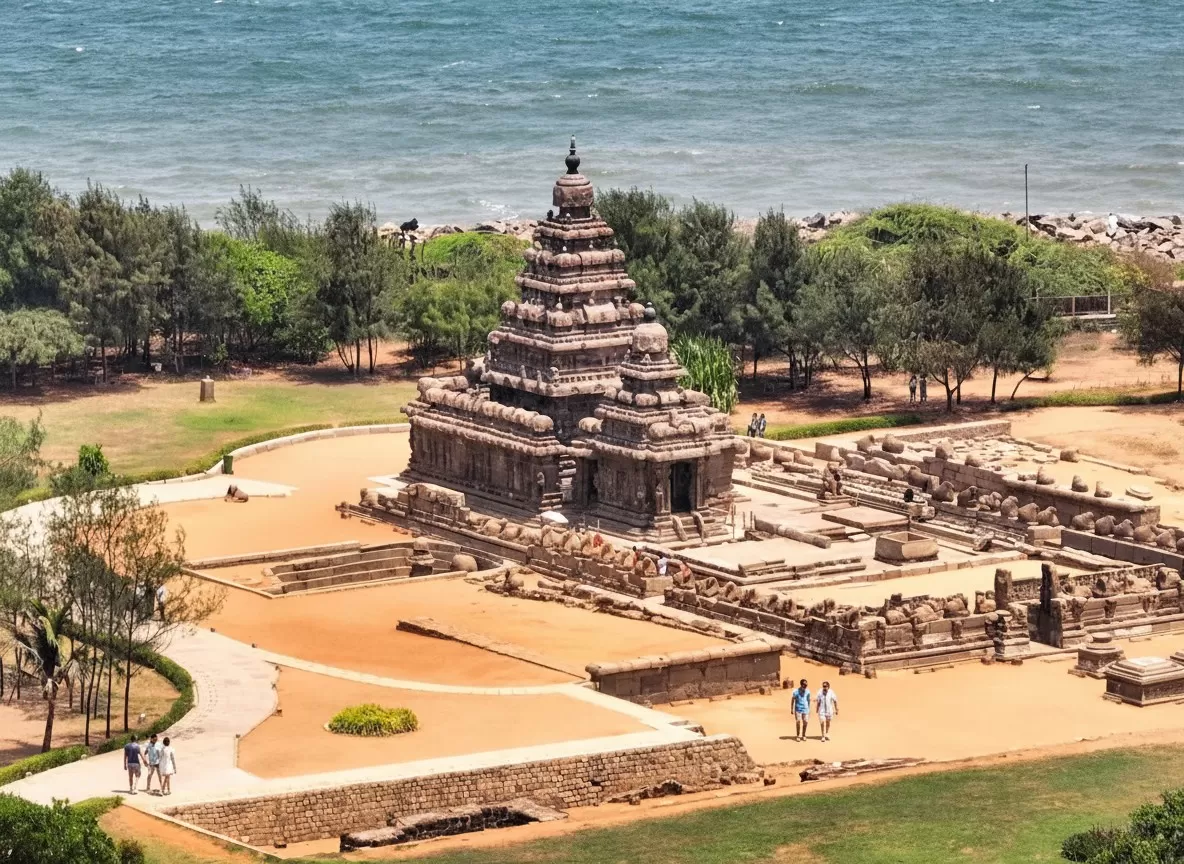
Pancha Rathas, also known as the Five Rathas, is one of the most remarkable monuments in Mahabalipuram, Tamil Nadu. Built during the 7th century under the Pallava dynasty, these monolithic rock-cut structures were carved from single granite outcrops. Each ratha is named after characters from the Mahabharata—Dharmaraja, Bhima, Arjuna, Nakula-Sahadeva, and Draupadi. Although never completed or consecrated, they represent early Dravidian temple architecture and are part of the UNESCO-listed Group of Monuments at Mahabalipuram.
Pancha Rathas is one of the most celebrated archaeological attractions in Mahabalipuram, Tamil Nadu. Constructed during the reign of the Pallava rulers in the 7th century CE, the monument complex showcases extraordinary craftsmanship and architectural innovation. The term "Pancha Rathas" means "Five Chariots," referring to the five individual structures that resemble ceremonial temple chariots. Despite their names, these monuments have no direct connection with the Pandavas of the Mahabharata and were never intended as functional temples. They remained unfinished after the death of the ruling king.
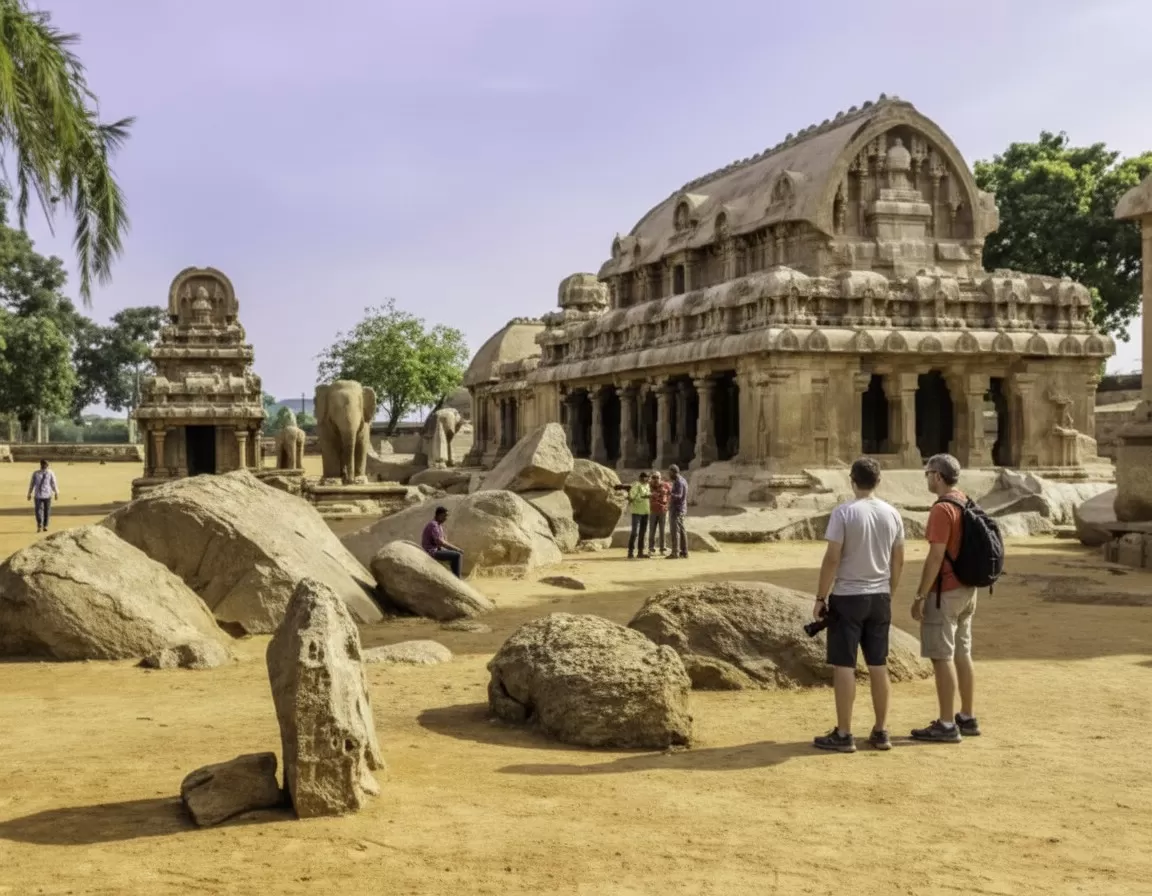
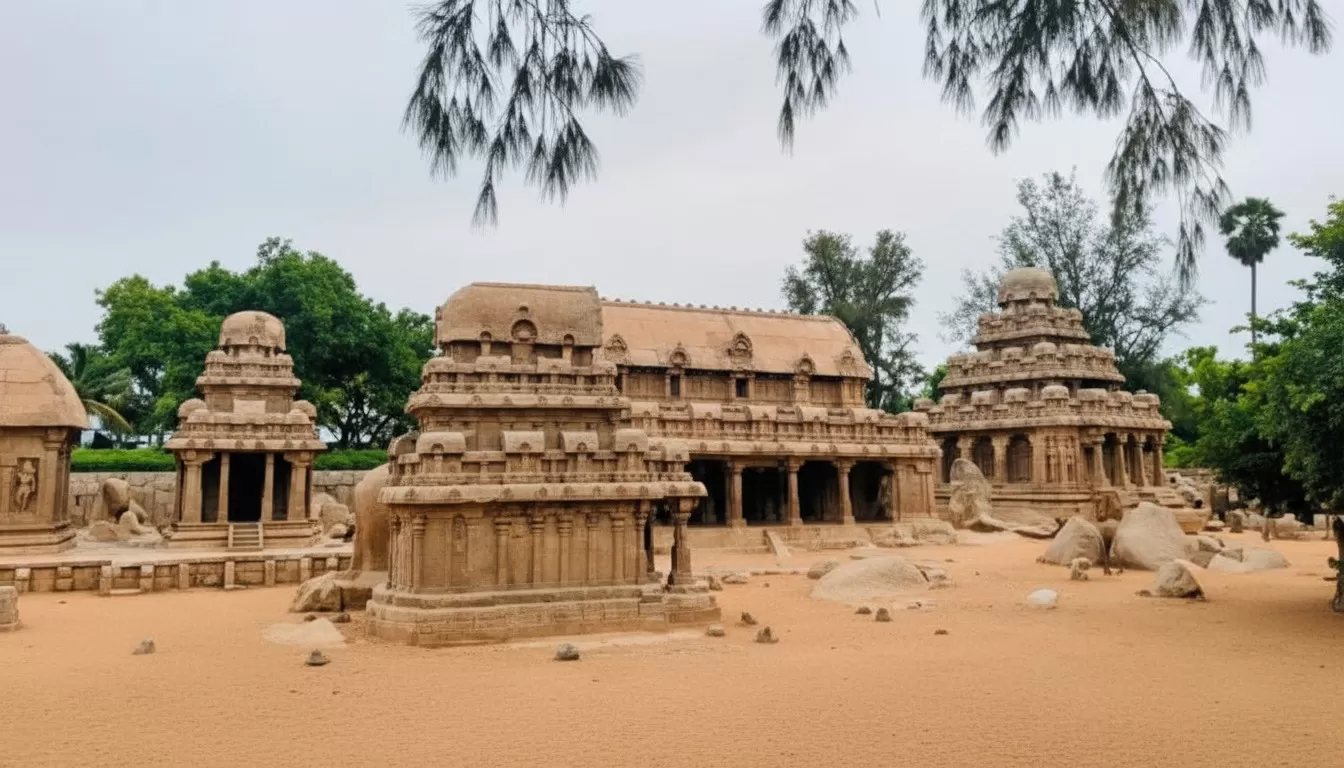
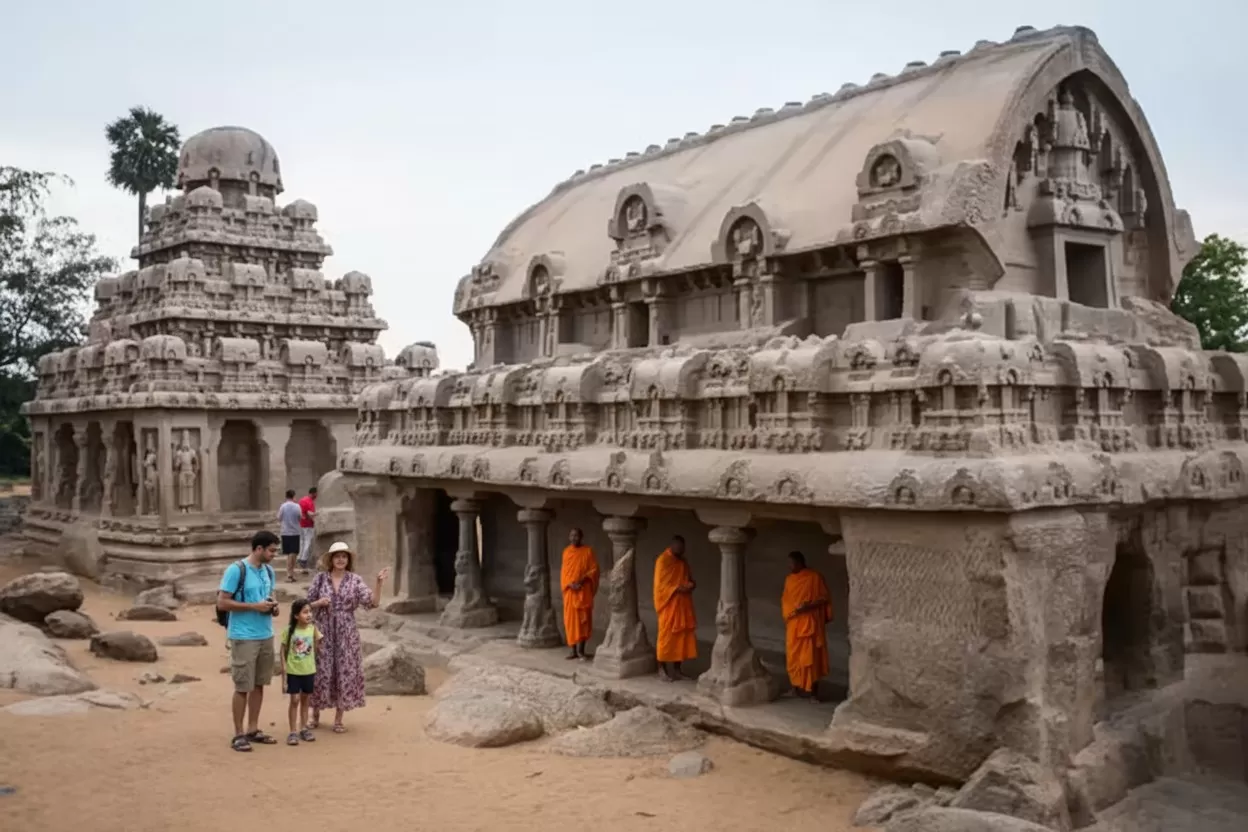
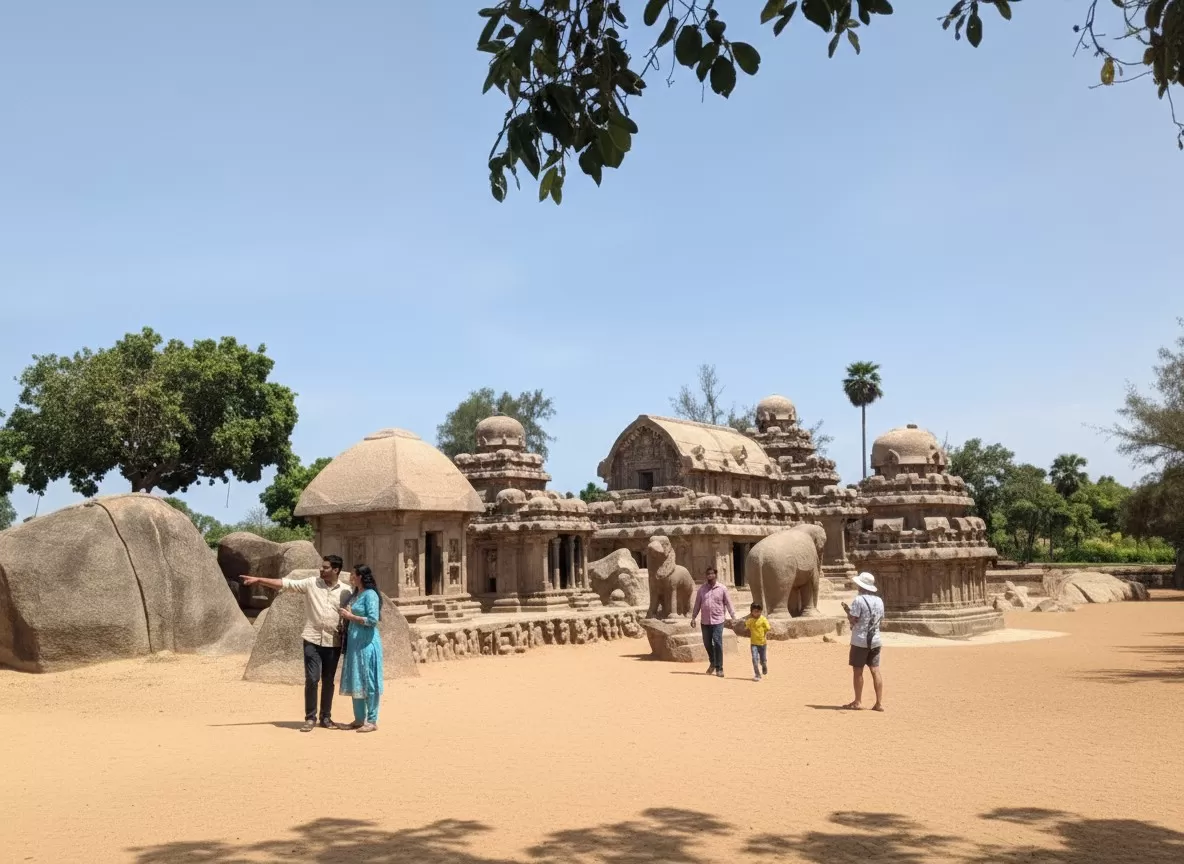
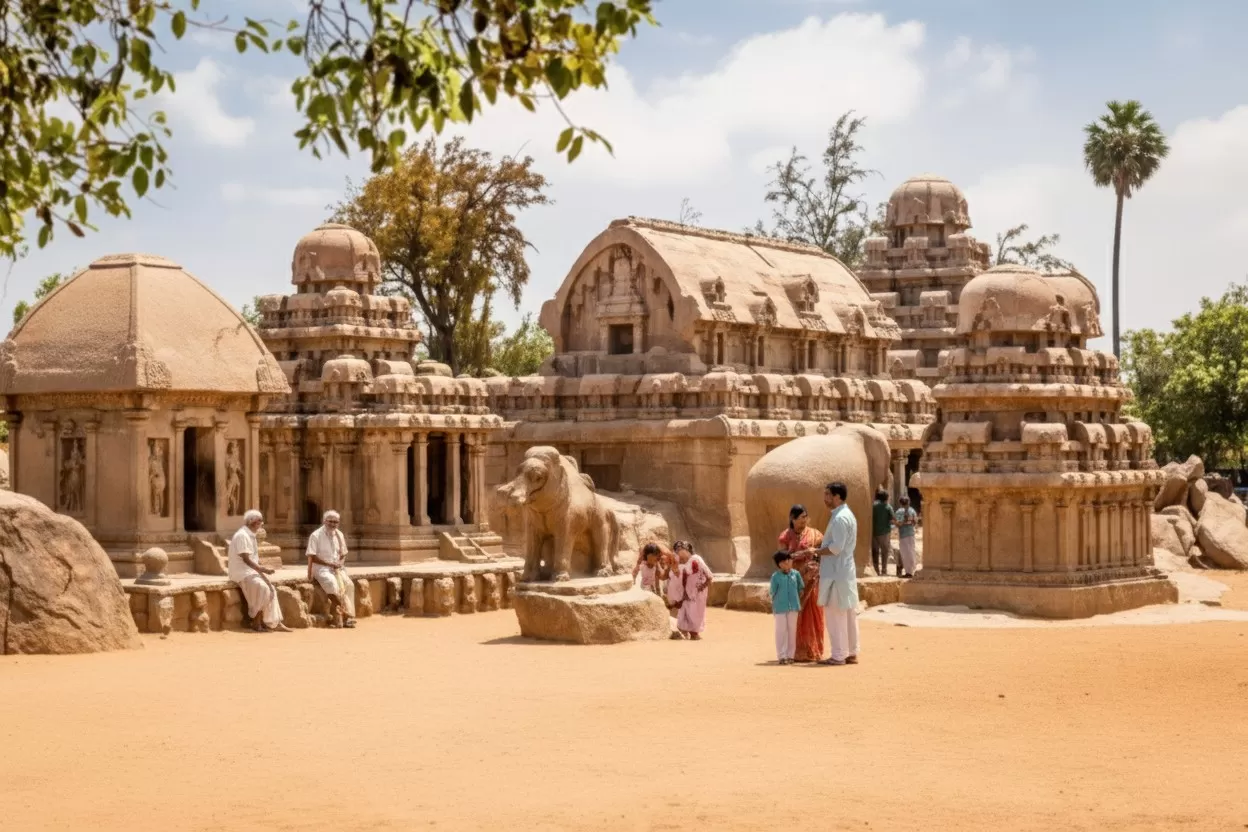
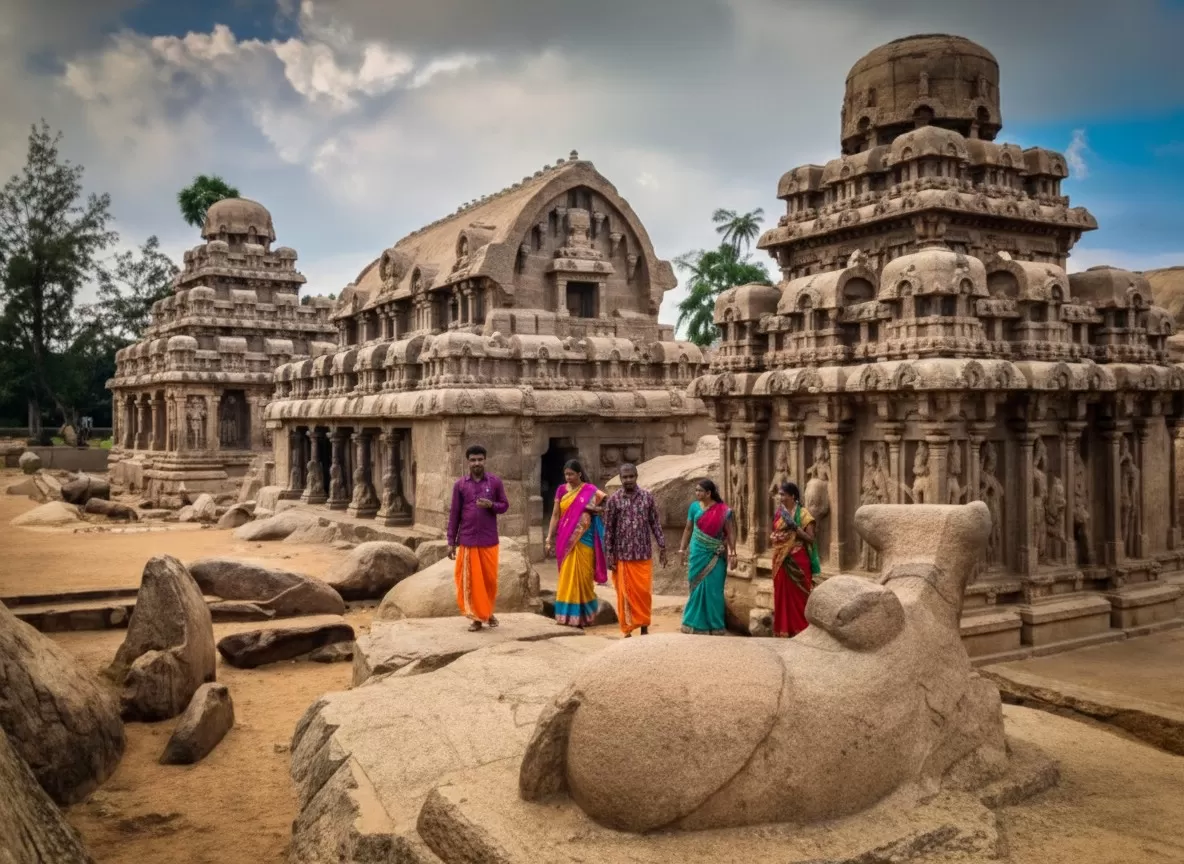
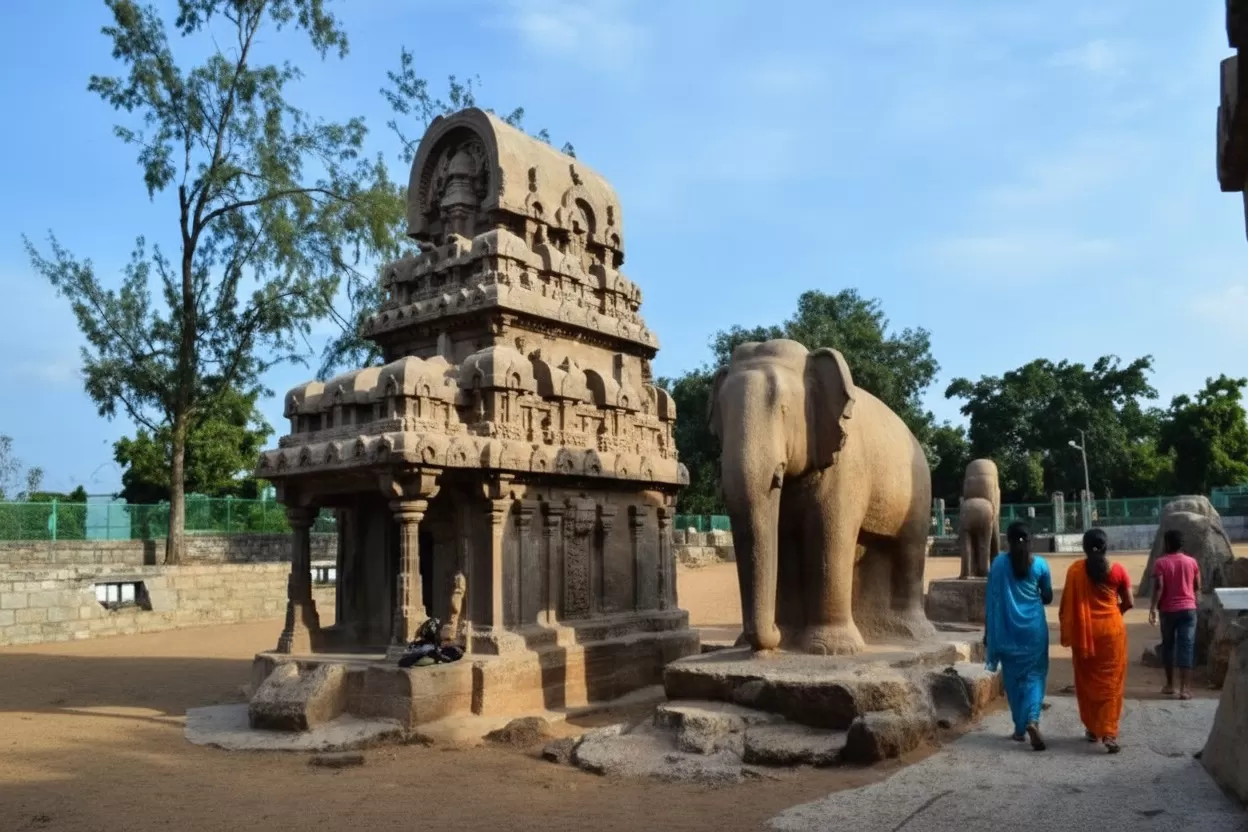
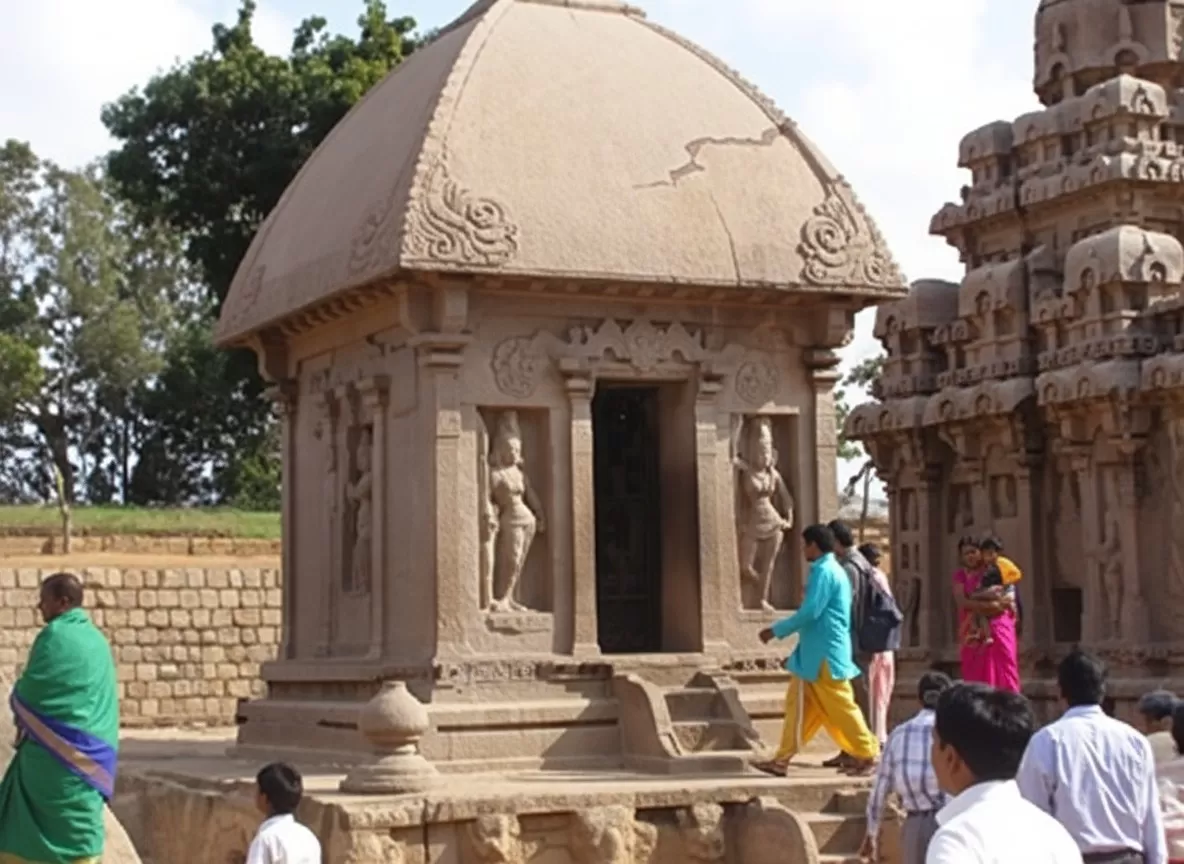
Each ratha was carved from a single granite outcrop, demonstrating the exceptional skill of Pallava artisans. The largest structure, Dharmaraja Ratha, displays a pyramidal design that influenced later South Indian temple architecture. Bhima Ratha features an elongated hall-like shape, while Arjuna Ratha is adorned with beautiful carvings of deities and mythical figures. Draupadi Ratha, the smallest, resembles a traditional hut and is dedicated to Goddess Durga. Nakula-Sahadeva Ratha stands apart with its distinctive architectural style and is accompanied by a magnificent elephant sculpture.
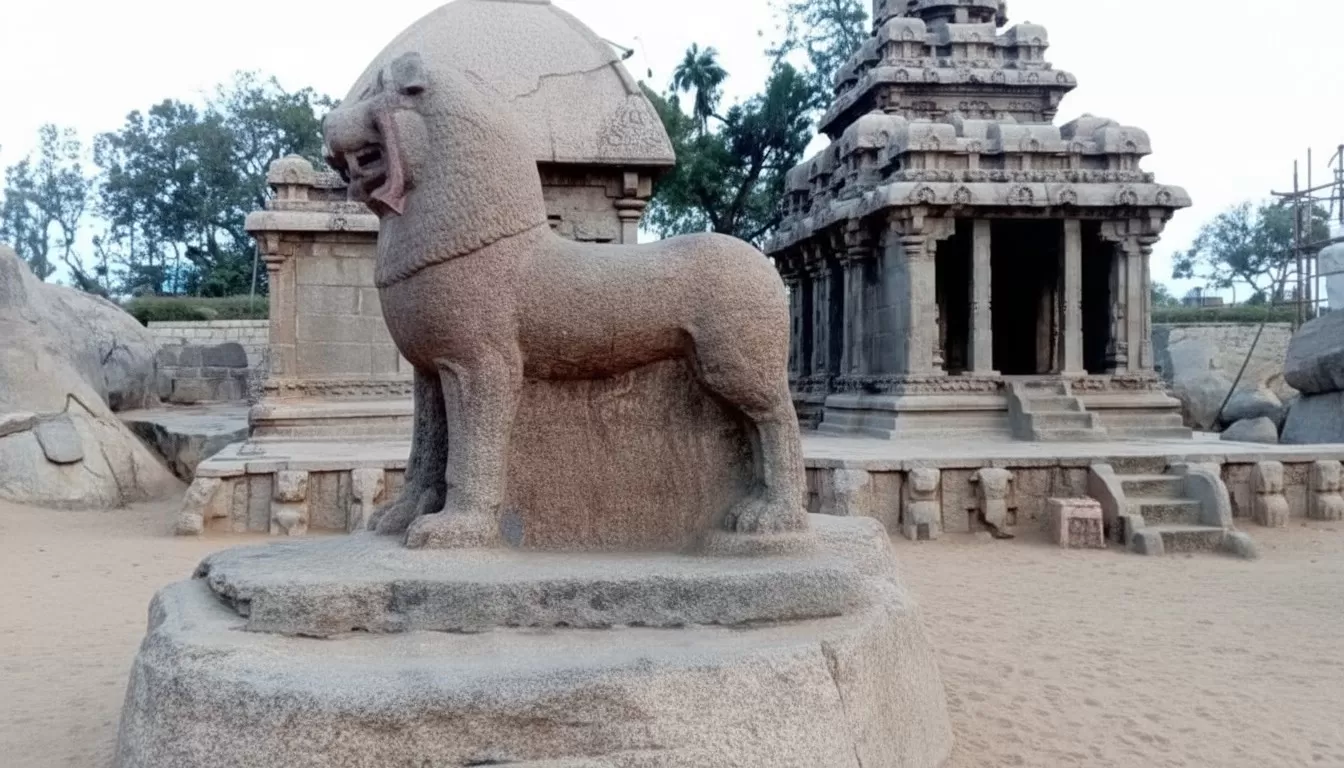
The site is particularly valuable because it illustrates the transition from rock-cut architecture to structural stone temples in South India. Visitors can closely observe decorative pillars, sculpted niches, and intricate carvings that highlight the artistic excellence of the Pallava era. The surrounding sculptures of a lion, elephant, and Nandi further enhance the monument's visual appeal.
Today, Pancha Rathas forms an important part of the UNESCO World Heritage-listed Group of Monuments at Mahabalipuram. It attracts thousands of tourists, historians, architects, and students every year. The monument stands as a timeless symbol of India's rich cultural heritage, offering visitors a fascinating glimpse into the creativity, engineering skills, and artistic vision of ancient South Indian civilization.
Each ratha was carved from a single granite outcrop, demonstrating the exceptional skill of Pallava artisans. The largest structure, Dharmaraja Ratha, displays a pyramidal design that influenced later South Indian temple architecture. Bhima Ratha features an elongated hall-like shape, while Arjuna Ratha is adorned with beautiful carvings of deities and mythical figures. Draupadi Ratha, the smallest, resembles a traditional hut and is dedicated to Goddess Durga. Nakula-Sahadeva Ratha stands apart with its distinctive architectural style and is accompanied by a magnificent elephant sculpture.
The site is particularly valuable because it illustrates the transition from rock-cut architecture to structural stone temples in South India. Visitors can closely observe decorative pillars, sculpted niches, and intricate carvings that highlight the artistic excellence of the Pallava era. The surrounding sculptures of a lion, elephant, and Nandi further enhance the monument's visual appeal.
Today, Pancha Rathas forms an important part of the UNESCO World Heritage-listed Group of Monuments at Mahabalipuram. It attracts thousands of tourists, historians, architects, and students every year. The monument stands as a timeless symbol of India's rich cultural heritage, offering visitors a fascinating glimpse into the creativity, engineering skills, and artistic vision of ancient South Indian civilization.