Tourist Sites Near Me – Best Places to Visit Nearby
Sanchi Stupa
Sanchi • Raisen • Madhya Pradesh
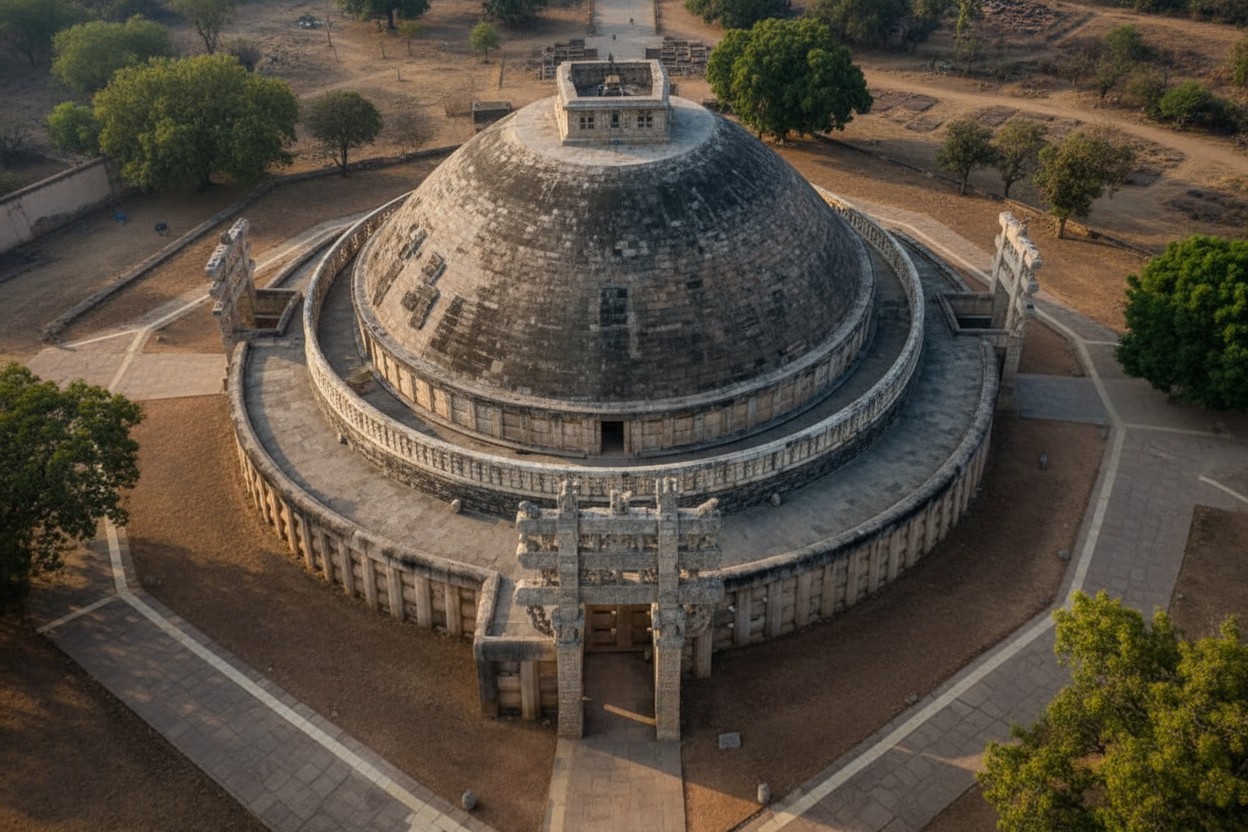
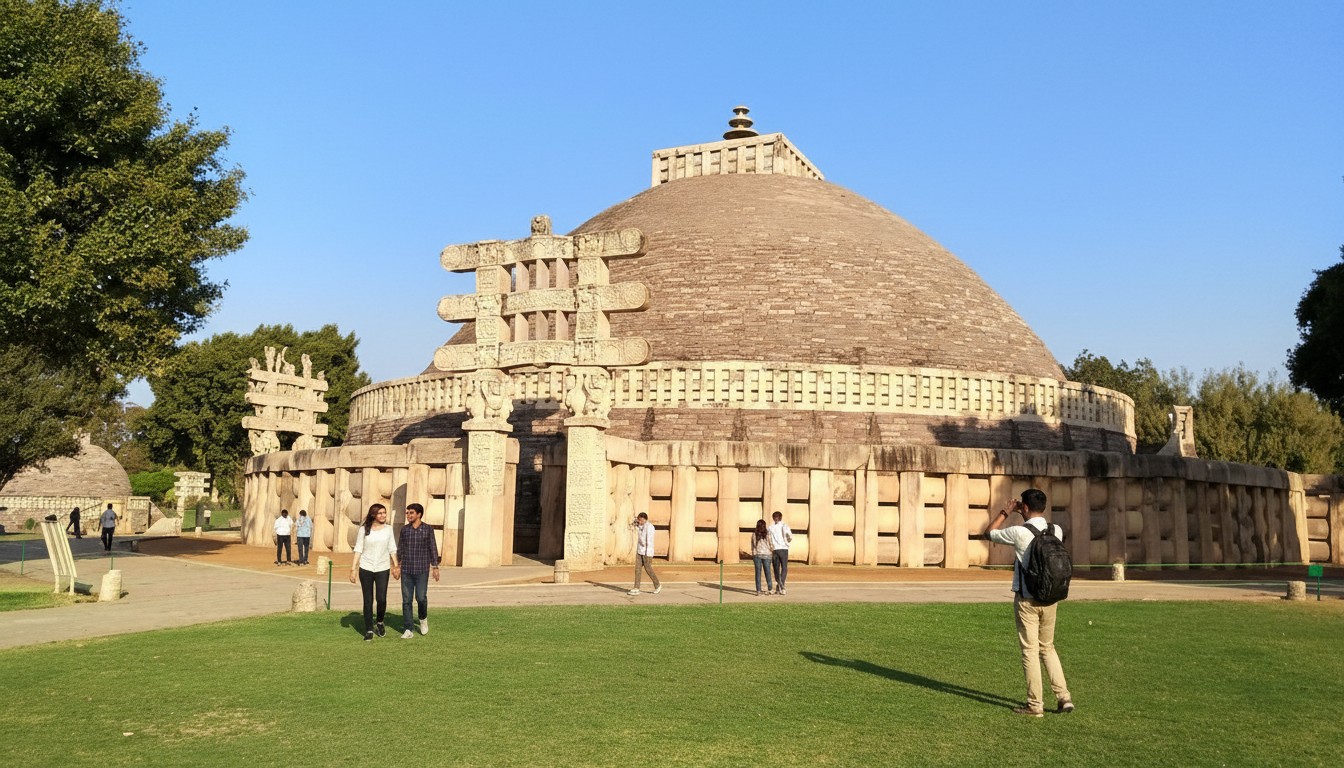
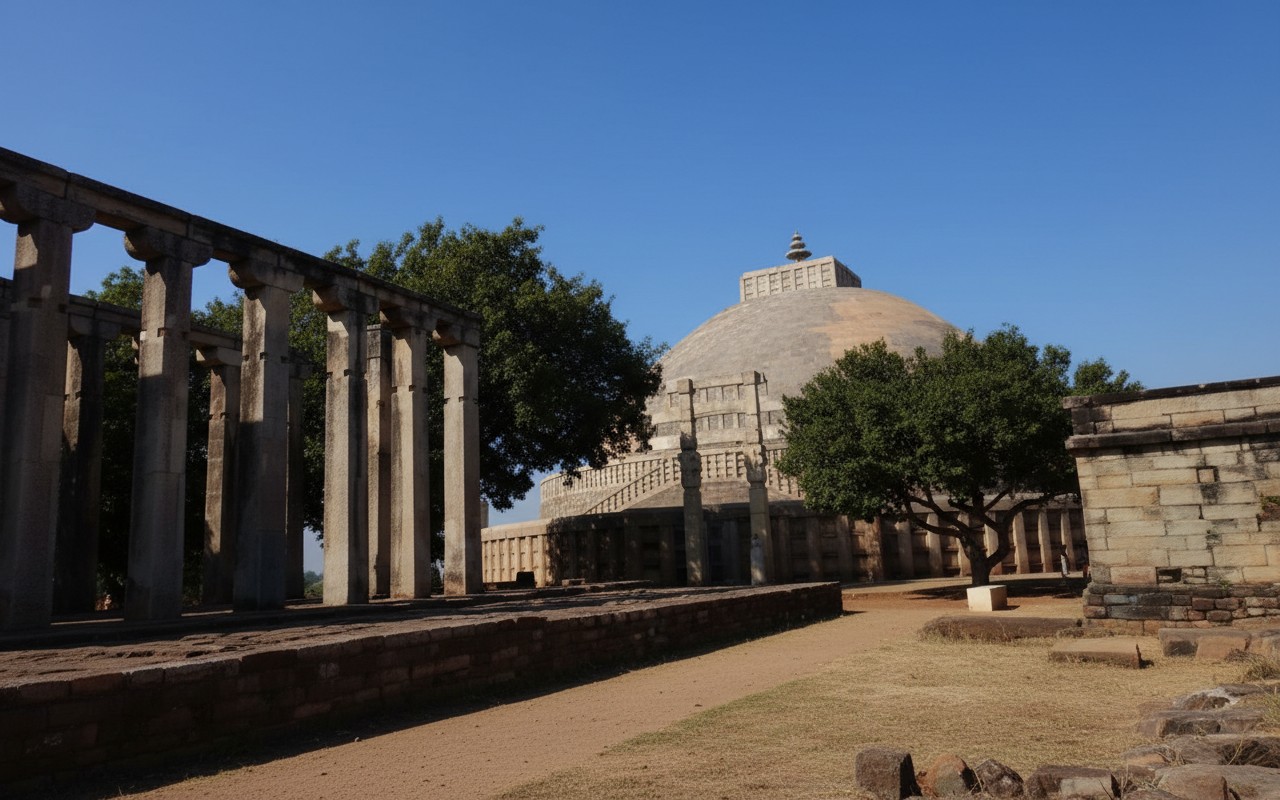
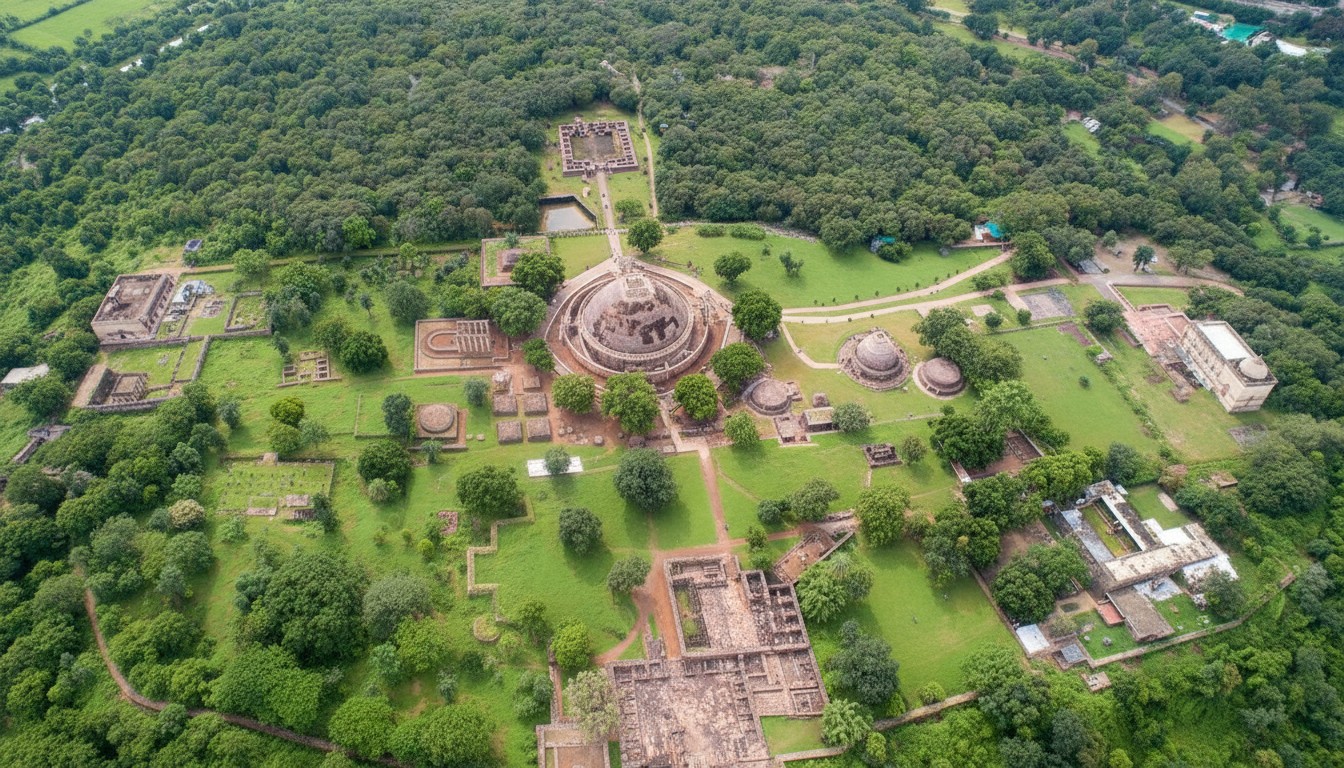
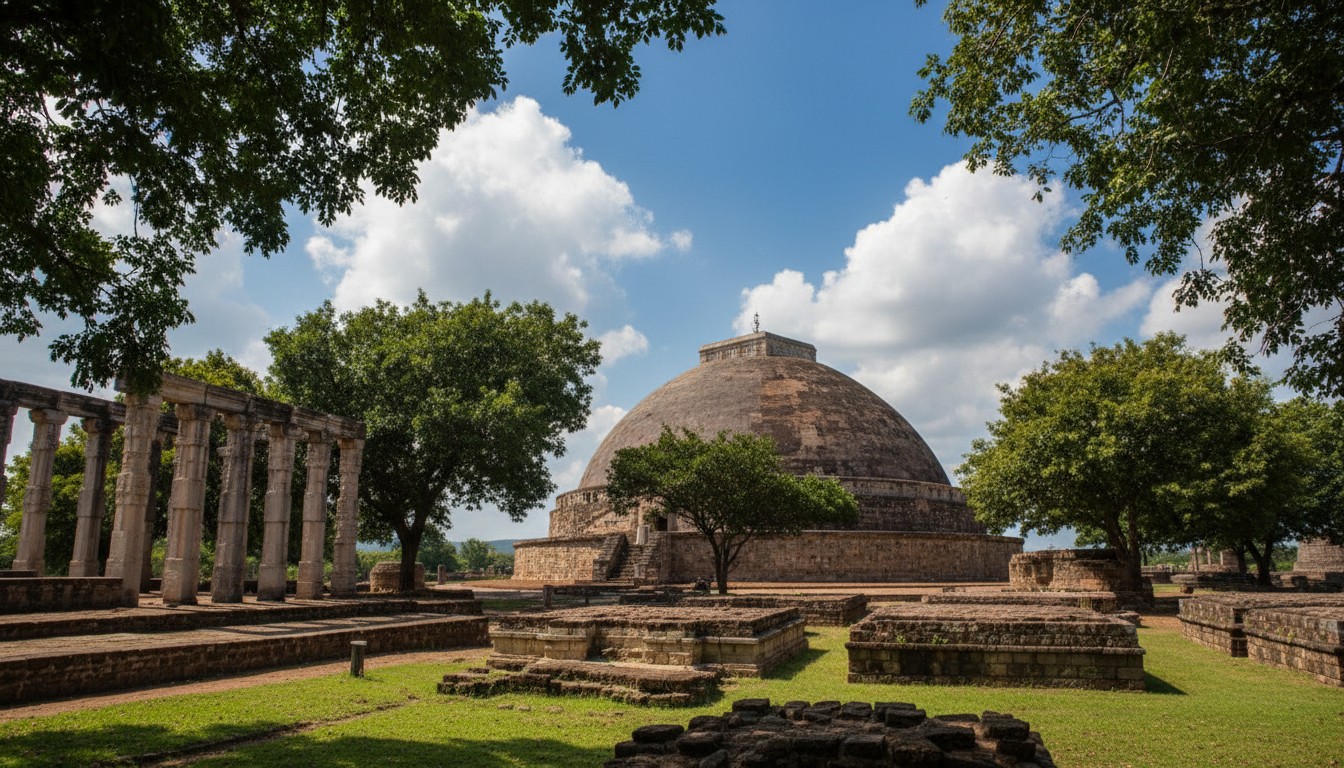
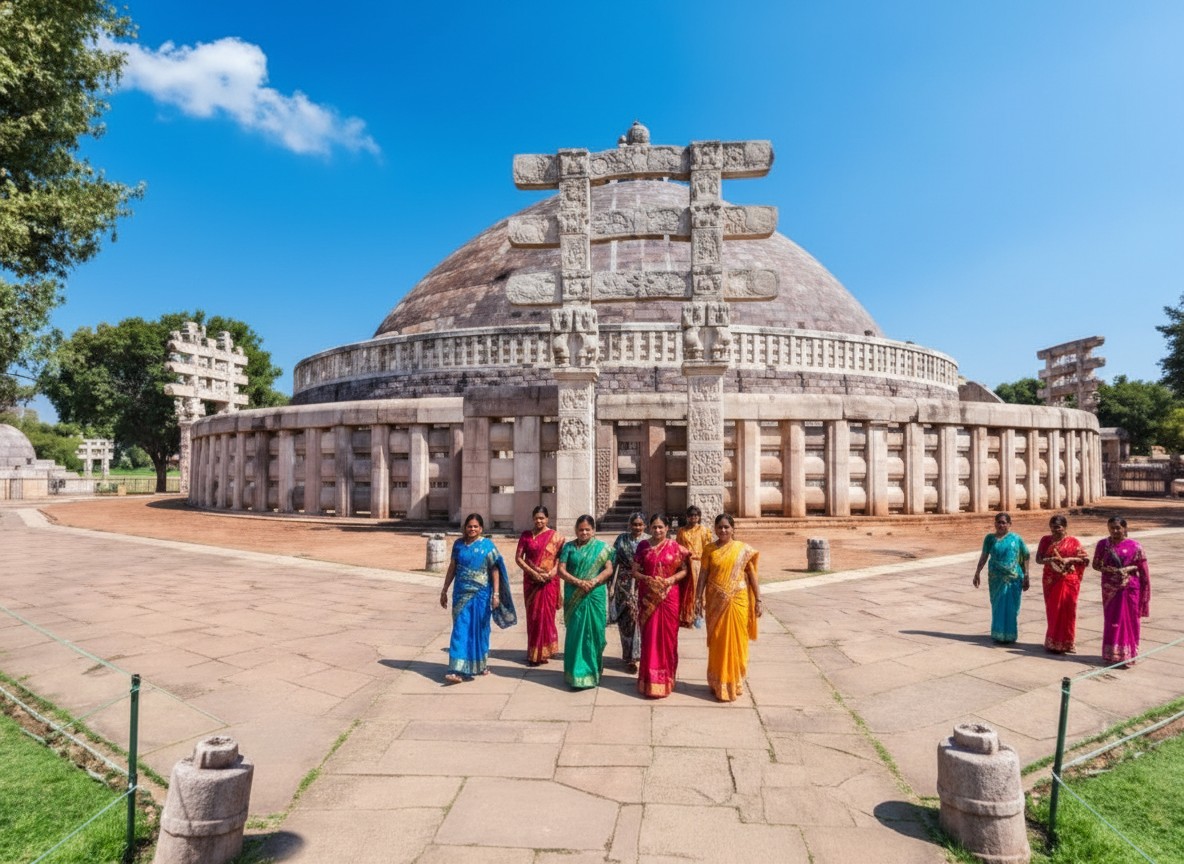
Sanchi Stupa is one of the oldest and most important Buddhist monuments in India. Built originally by Emperor Ashoka in the 3rd century BCE, the stupa is famous for its grand hemispherical dome, beautifully carved gateways, and rich historical significance. It is a UNESCO World Heritage Site and represents the spread of Buddhism across Asia. The site contains monasteries, temples, pillars, and stupas that reflect ancient Indian architecture and art. The intricate carvings on the four gateways depict scenes from the life of Buddha, Jataka tales, and symbols of peace and spirituality.
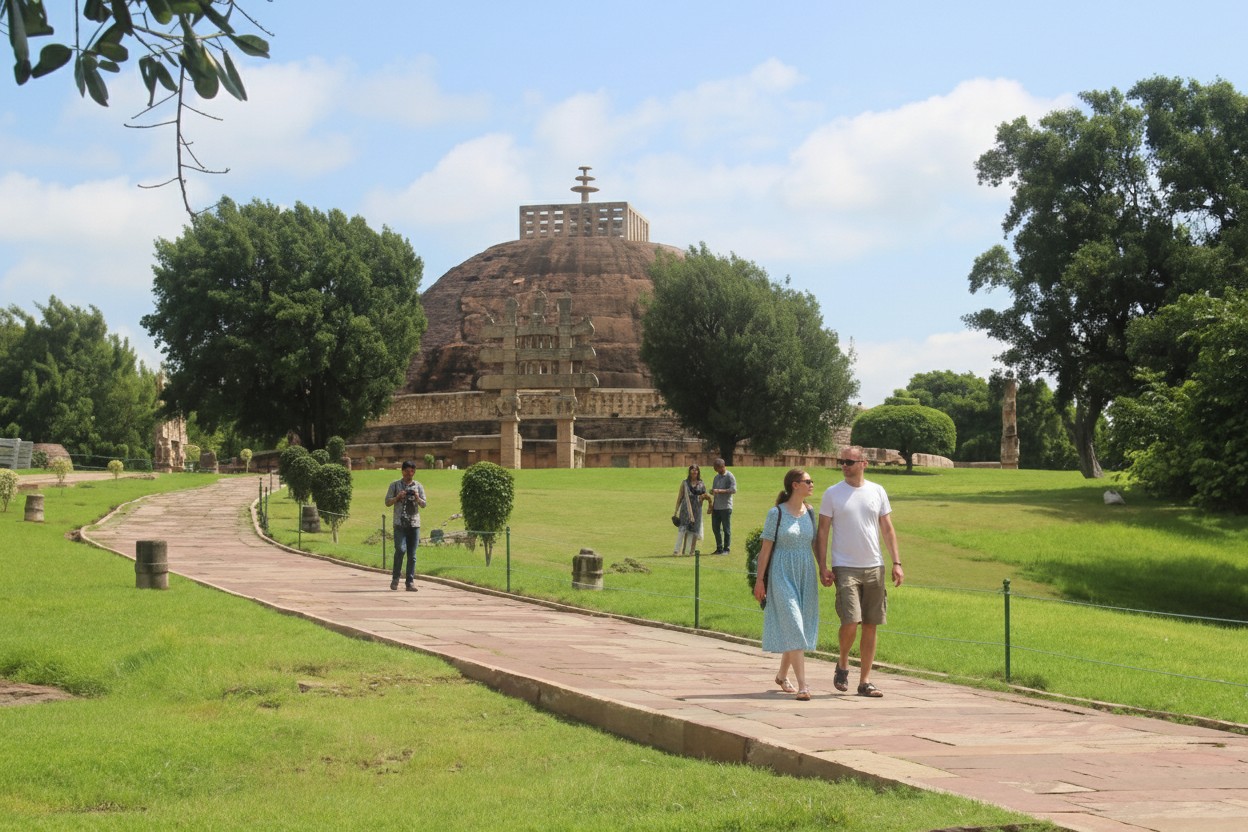
Sanchi Stupa is one of India’s most remarkable historical and spiritual destinations. Located in the state of Madhya Pradesh, this ancient Buddhist monument was commissioned by Emperor Ashoka in the 3rd century BCE after he embraced Buddhism. The Great Stupa at Sanchi is considered a symbol of peace, devotion, and Buddhist philosophy. Its massive hemispherical dome, stone railings, and intricately carved gateways attract visitors from all over the world.
The four elaborately decorated gateways, known as toranas, are the main attraction of the monument. These gateways beautifully depict stories from Buddha’s life, Jataka tales, and various symbols associated with Buddhism. Interestingly, Buddha is represented symbolically through footprints, the Bodhi tree, wheels, and empty thrones instead of direct human images.
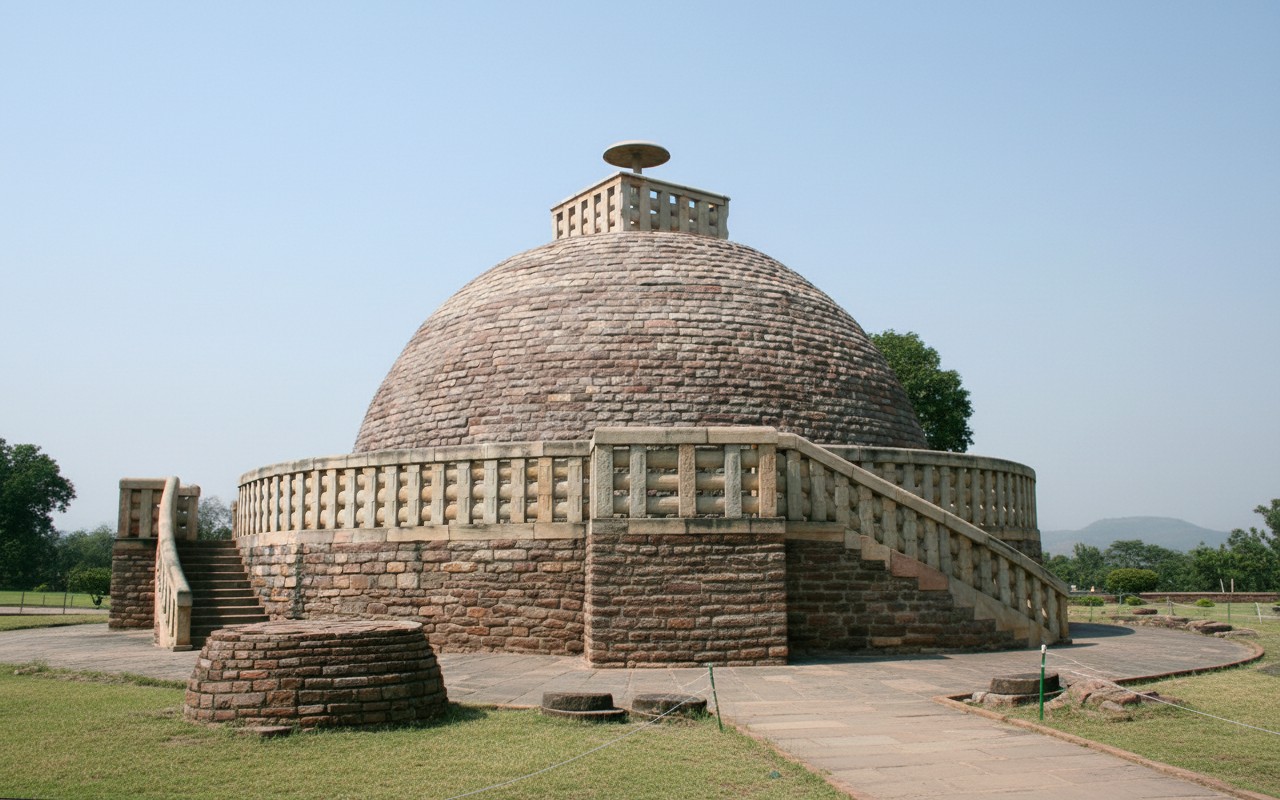
The Sanchi complex also includes monasteries, temples, smaller stupas, and the remains of the famous Ashokan pillar. The calm environment and scenic hilltop setting create a peaceful atmosphere for visitors and pilgrims. The site reflects the brilliance of ancient Indian craftsmanship and architecture that has survived for centuries.
Sanchi is not only a religious destination but also an educational and cultural treasure. Historians, archaeologists, photographers, and travelers visit the site to understand India’s rich Buddhist heritage. The monument stands as a timeless reminder of harmony, non-violence, and spiritual wisdom. Visiting Sanchi offers a unique opportunity to experience ancient history, artistic excellence, and inner peace all in one place.
🎯 Things to do
- Explore the Great Stupa & Toranas — admire carvings and symbolism
- Walk the circumambulation path (pradakshina) around the stupa
- Visit smaller stupas (No.2 & No.3) and understand their history
- Sanchi Archaeological Museum — see artifacts
- the Ashokan lion capital/ sculptures relics
- Meditate or reflect in the tranquil and spiritual environment
- Photography — especially of gateways and areas around sunrise/sunset
- Attend sound & light shows (offered seasonally) to learn the site’s history after dark.
📍 Near By
- Udayagiri Caves — ancient rock-cut caves with carvings (~10 km)
- Bija Mandal Temple — historic temple ruins (~9 km)
- Bhimbetka Rock Shelters — UNESCO site with prehistoric art (~57 km)
- Satdhara Stupas (archaeological site) — ancient stupas ~9 km west of Sanchi
- Sonari Stupas — another Buddhist complex ~11 km away
- Vidisha Town — historic city ~10 km away with temples and ancient sites.
🛣️ How to Reach
By Air: The nearest airport is Raja Bhoj Airport about 55 km away.,
By Train: The nearest railway station is Sanchi Railway Station. Major rail connectivity is available from Bhopal and Vidisha.,
By Road: Sanchi is well connected by road from Bhopal Indore and nearby cities. Regular buses and taxis are available.
⭐ Why Visit
Explore ancient Buddhist heritage and architecture.,
Experience peaceful surroundings and spiritual atmosphere.,
View detailed stone carvings and historic monuments.,
Learn about Emperor Ashoka and Buddhist culture.,
Ideal destination for history lovers photographers and travelers.
💡 Travel Tips
Best time to visit: October to March.,
Wear comfortable walking shoes.,
Carry water and light snacks.,
Visit early morning or evening for pleasant weather.,
Respect the historical site and avoid littering.
🌟 Special Features
UNESCO World Heritage Site.,
Magnificent carved toranas (gateways).,
Ancient Ashokan pillar remains.,
Combination of history religion and architecture.,
Beautiful hilltop location with panoramic views.
Mahabalipuram (Mamallapuram)
Mahabalipuram • Chengalpattu • Tamil Nadu
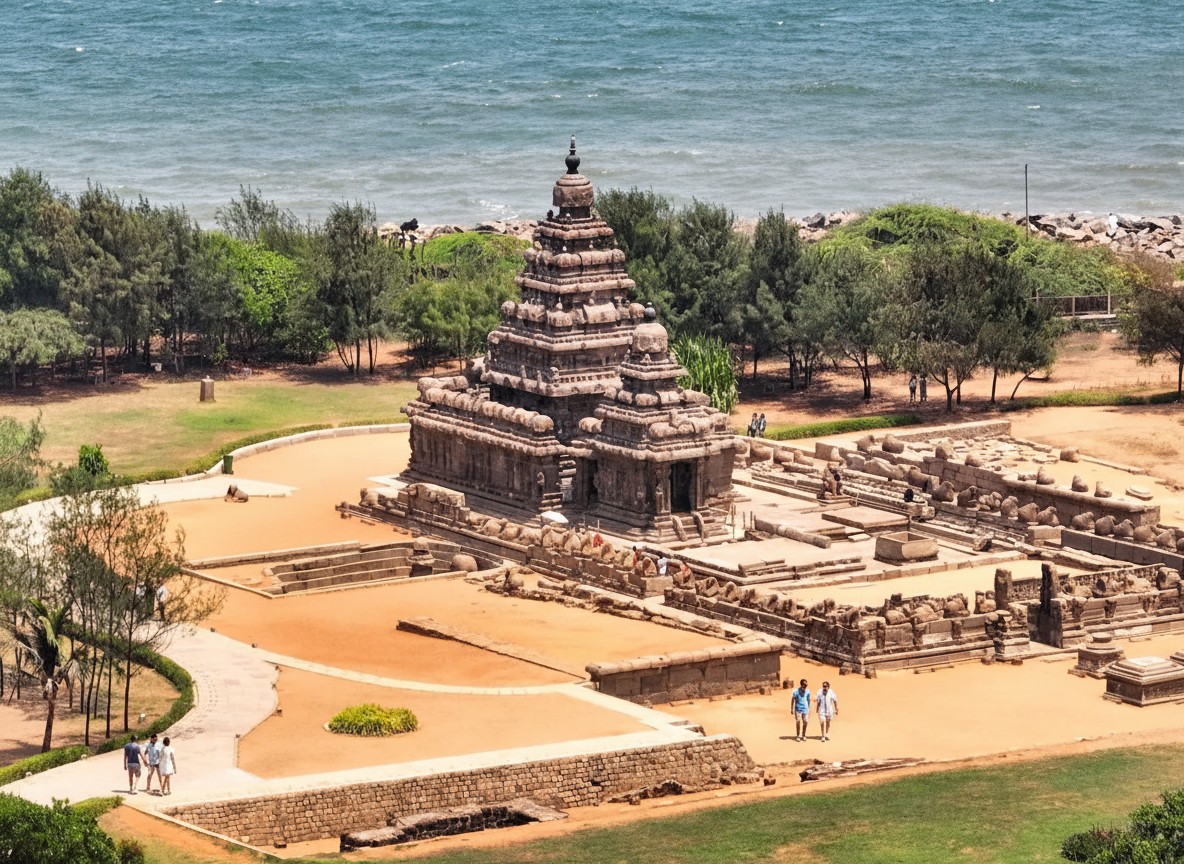
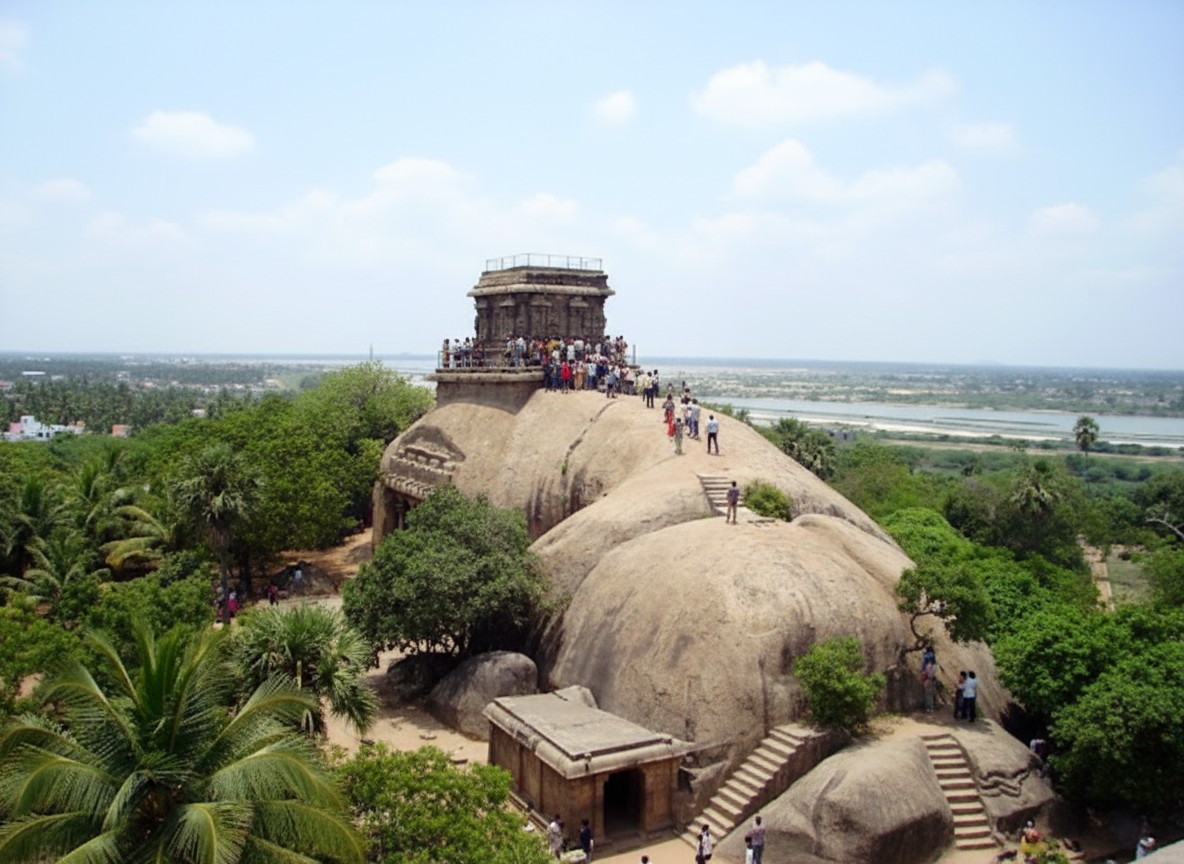
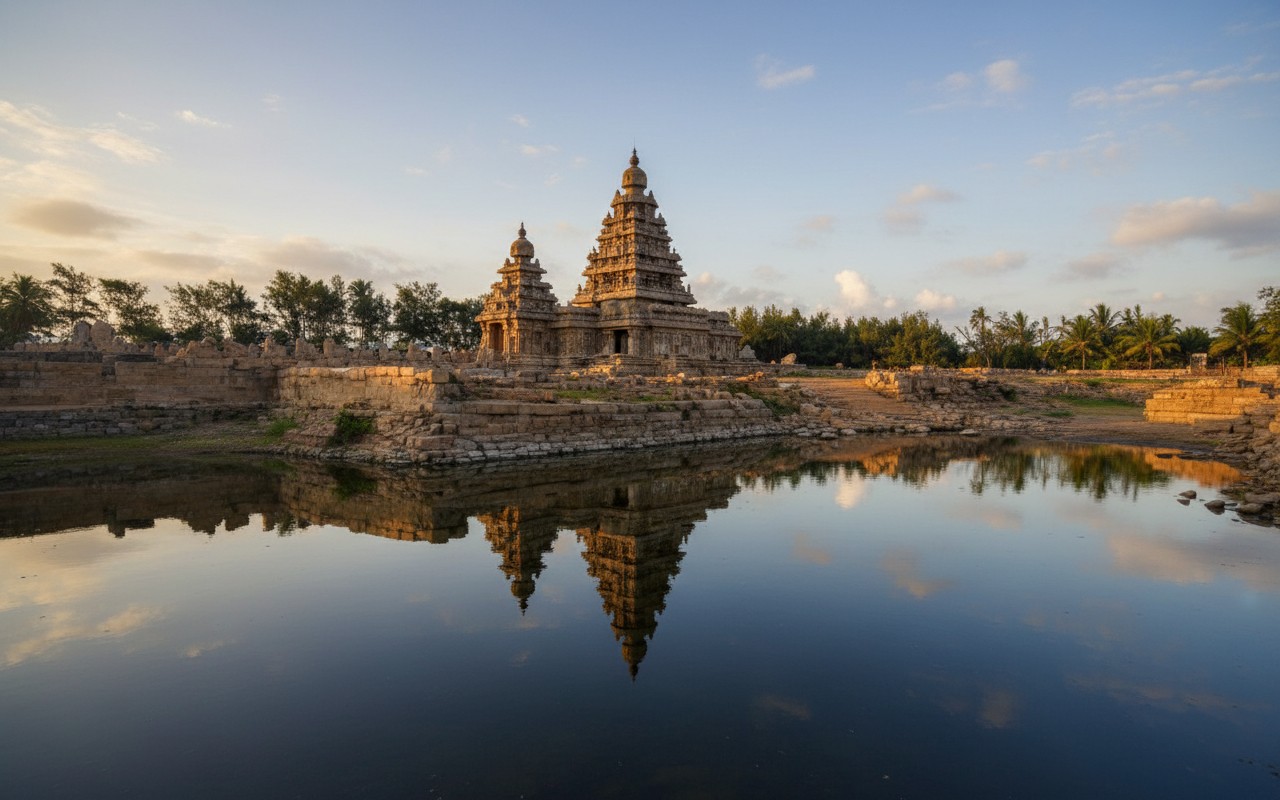
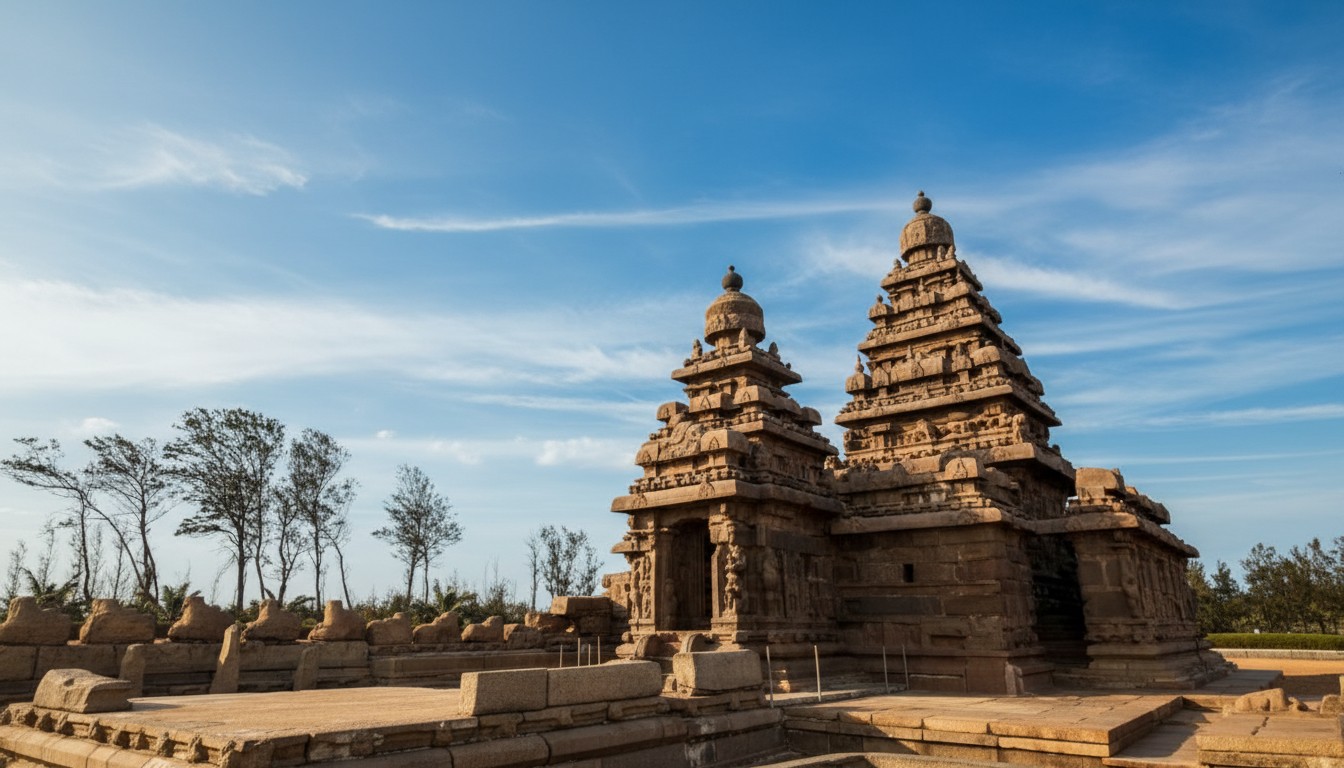
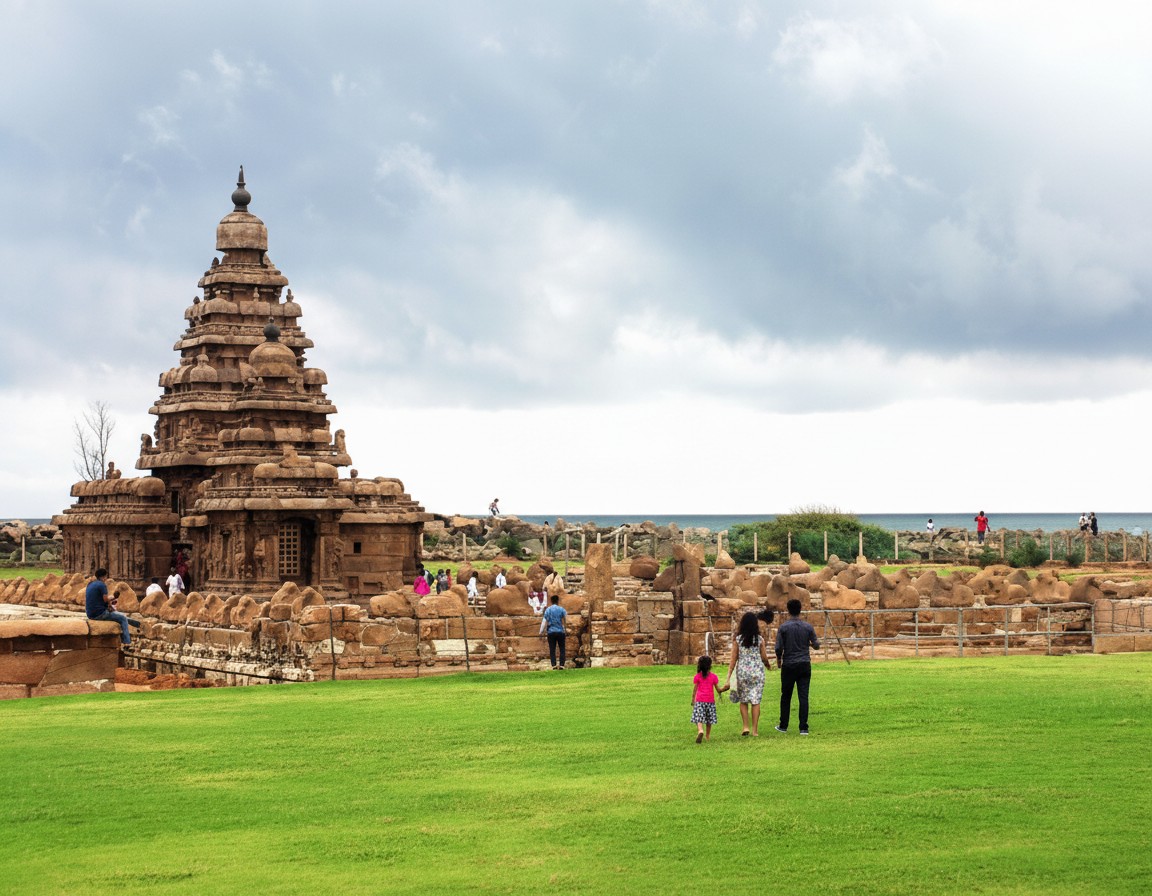
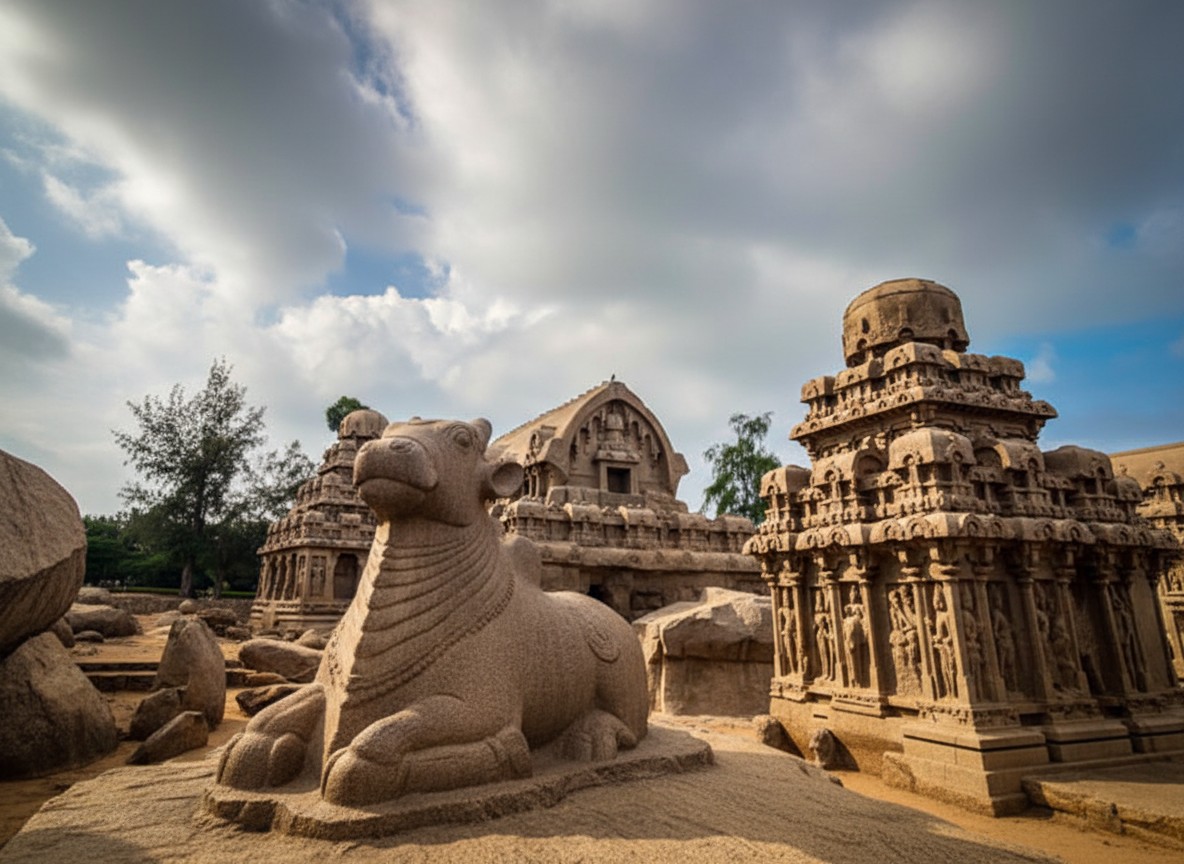
Mahabalipuram, also known as Mamallapuram, is a historic coastal town in the Indian state of Tamil Nadu. Famous for its magnificent rock-cut temples, ancient monuments, and beautiful beaches, it was once a thriving seaport of the Pallava dynasty during the 7th and 8th centuries. The town is now recognized as a UNESCO World Heritage Site and attracts travelers, history lovers, photographers, and spiritual seekers from around the world.
Mahabalipuram is one of India’s most fascinating heritage destinations, located on the scenic Coromandel Coast along the Bay of Bengal. This ancient town was developed by the Pallava kings and became an important center for art, architecture, trade, and religion during the 7th century. Today, Mahabalipuram is globally admired for its extraordinary stone monuments and intricate rock carvings.
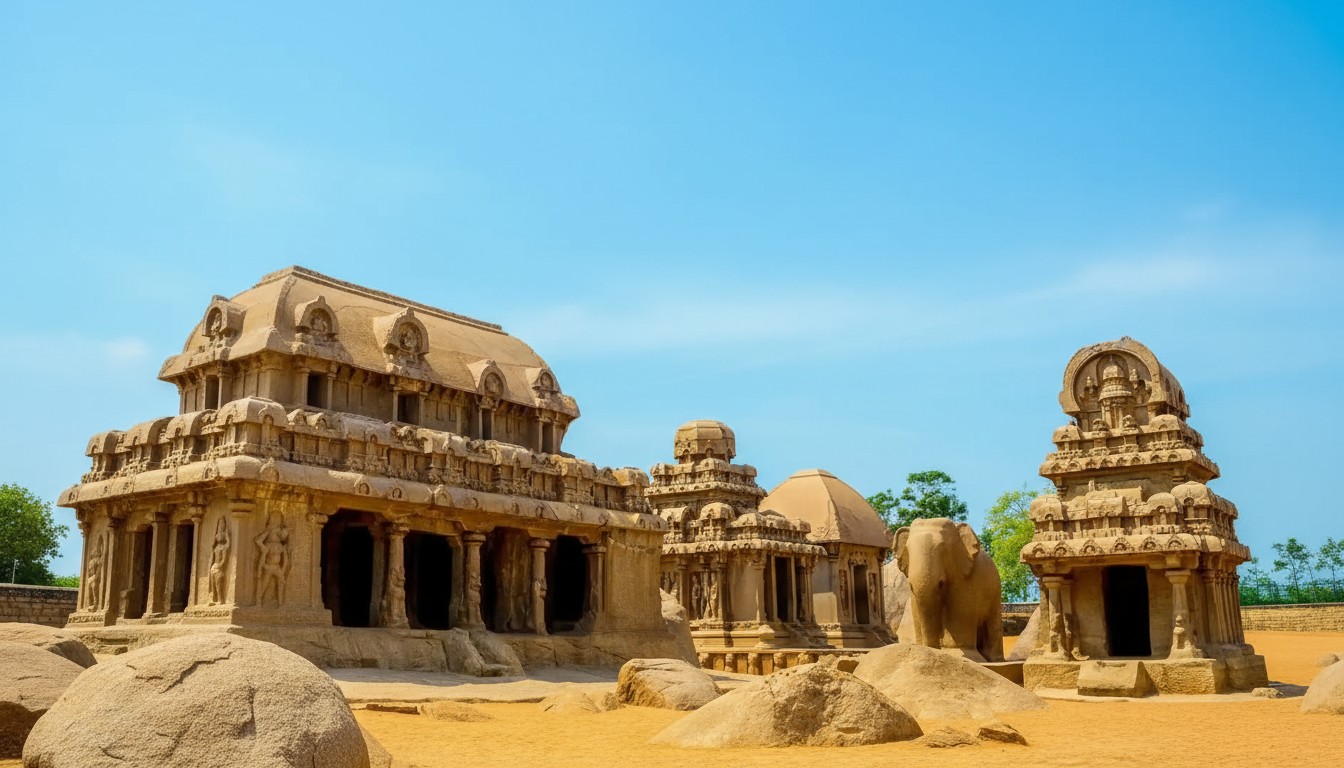
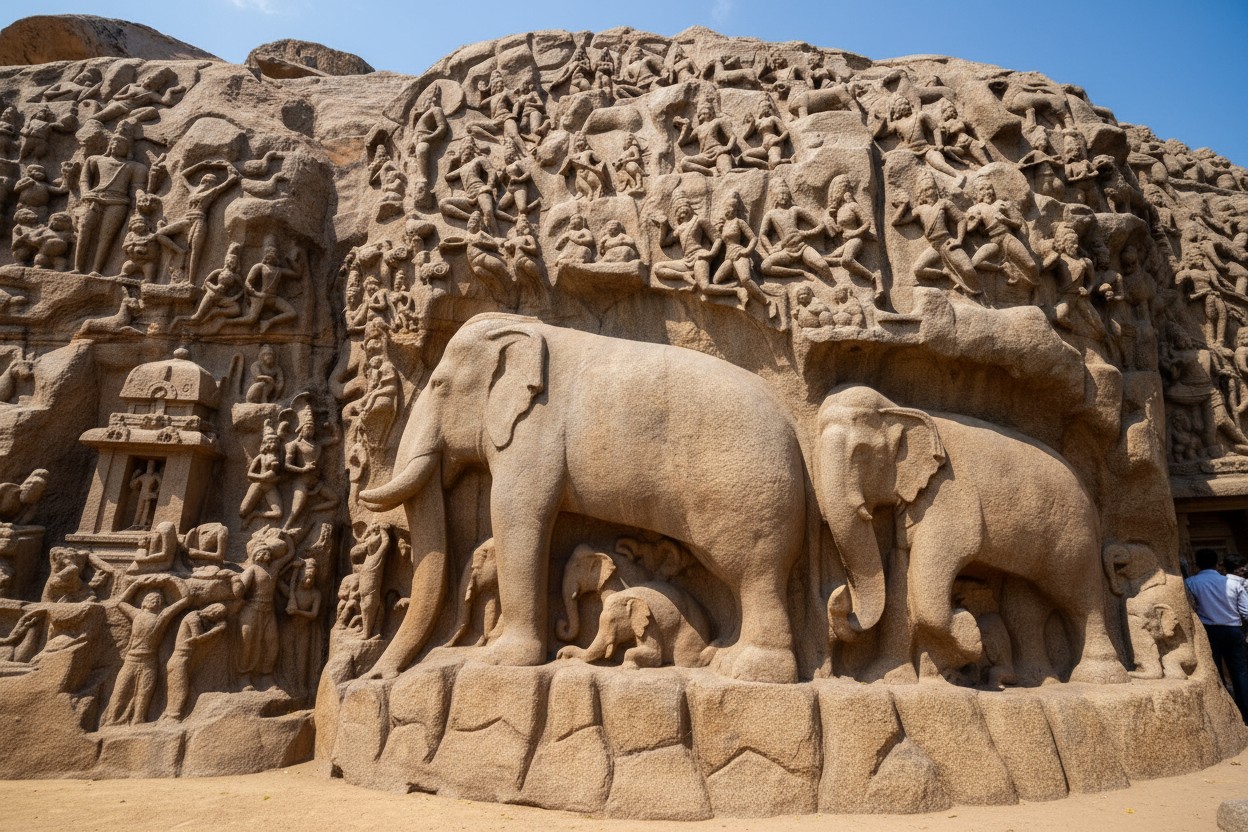
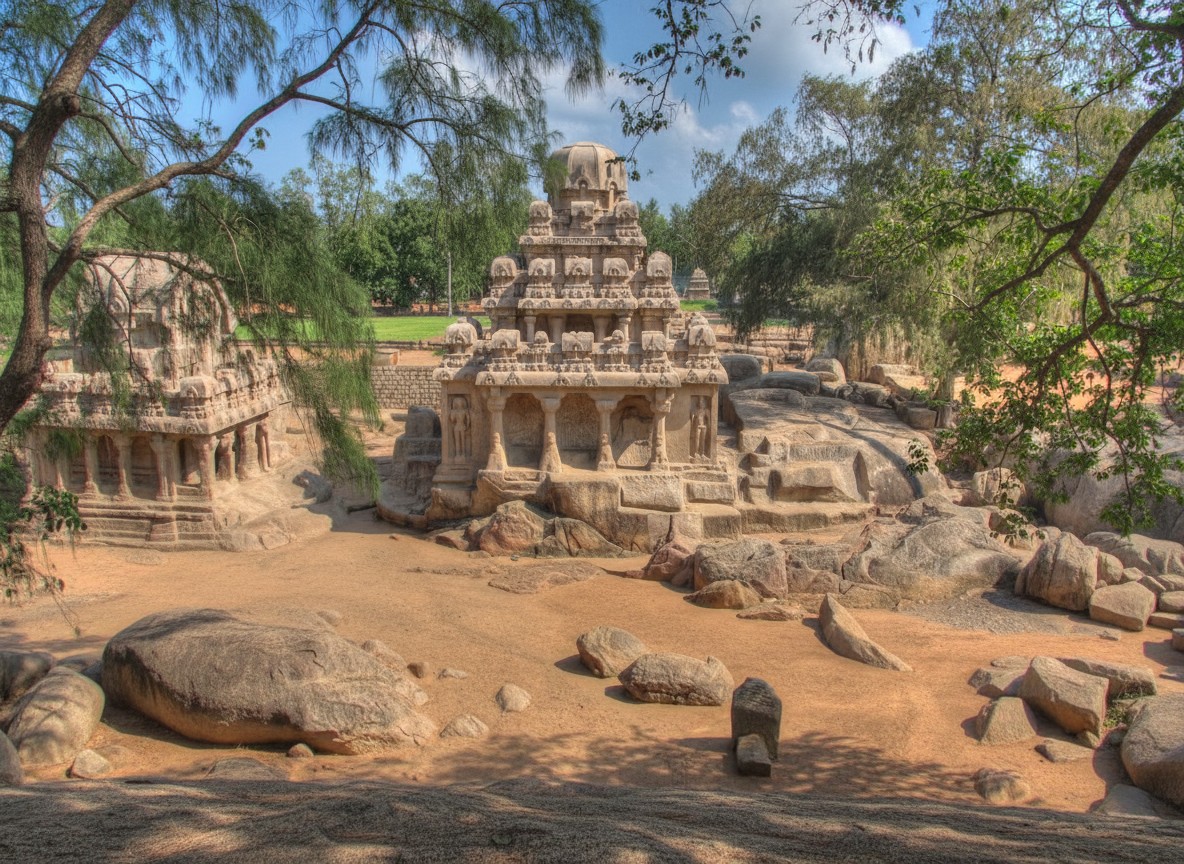
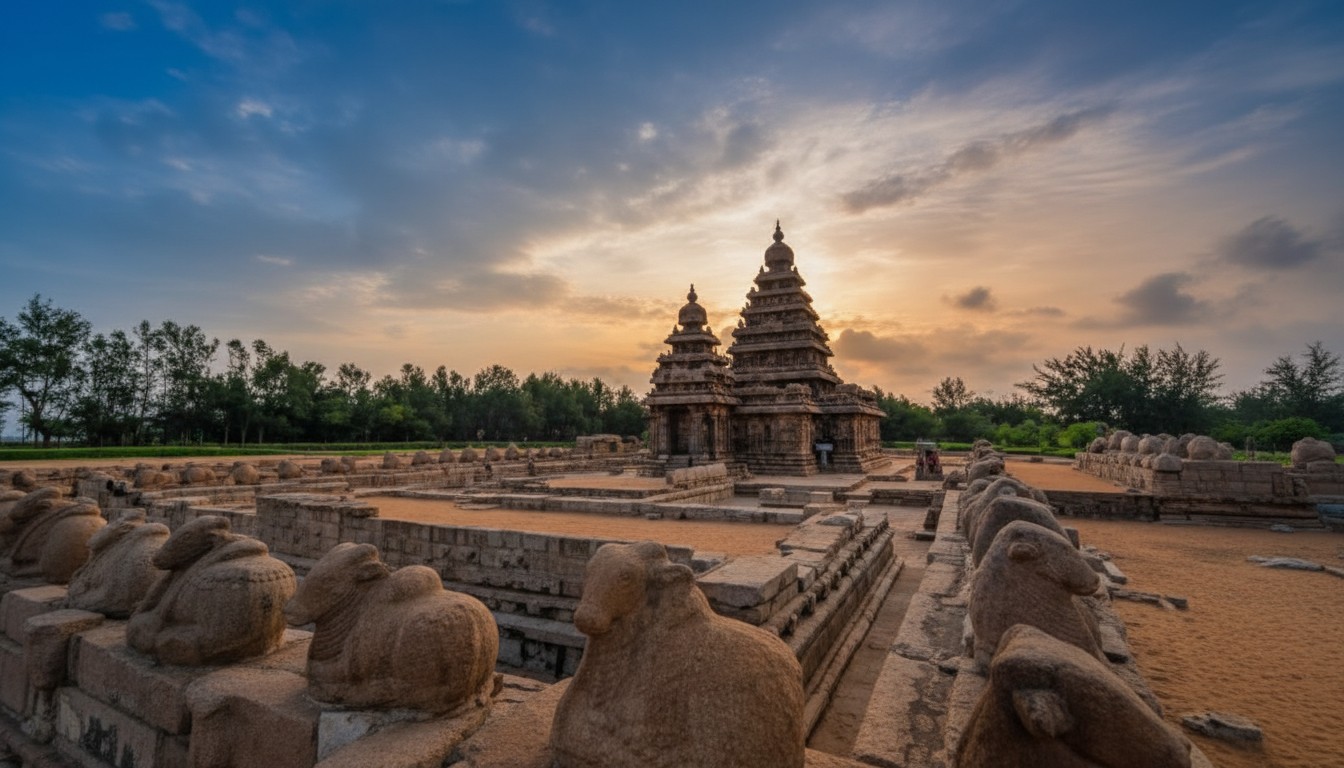
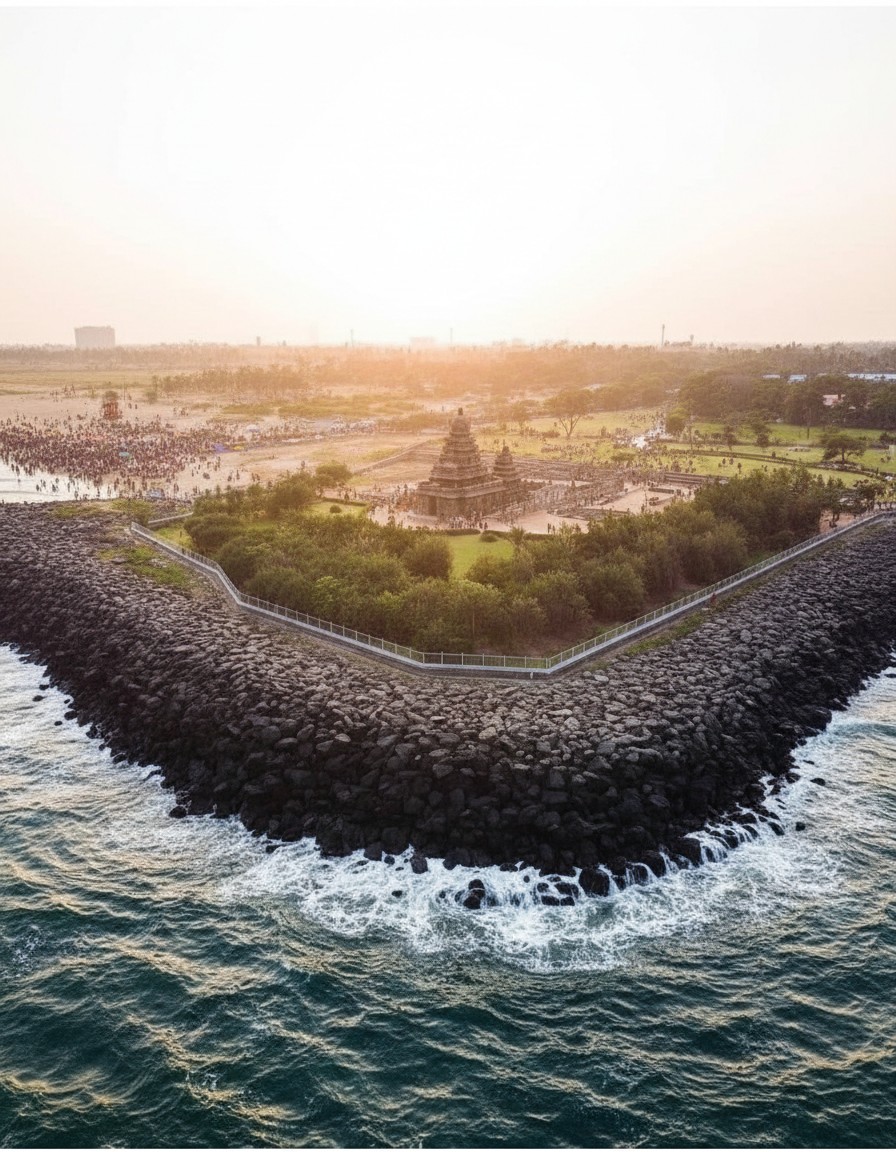
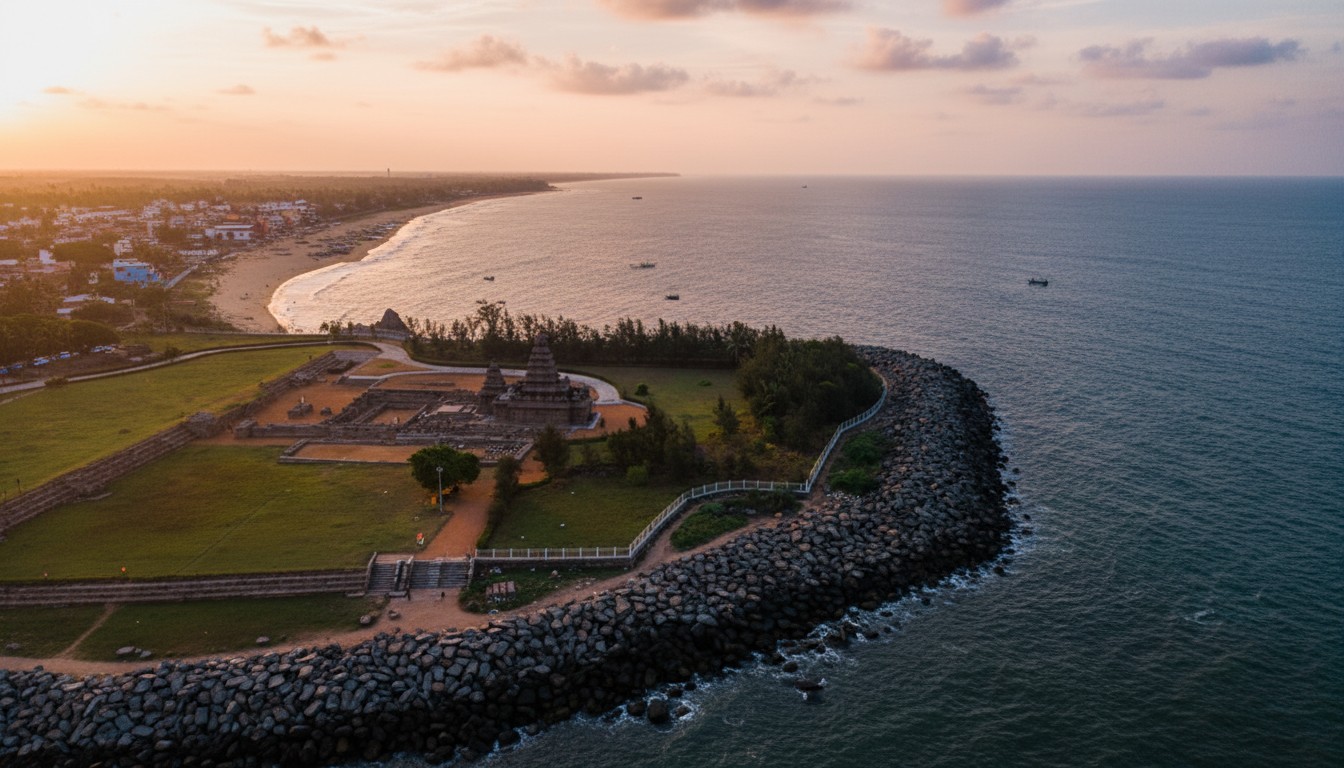
The town’s most iconic attraction is the Shore Temple, a beautiful temple standing beside the sea that reflects the brilliance of early Dravidian architecture. Another major attraction is Pancha Rathas, a group of monolithic rock temples carved from single stones. Visitors are also amazed by Arjuna's Penance, one of the world’s largest open-air rock relief sculptures.
Apart from historical monuments, Mahabalipuram offers peaceful beaches, local handicrafts, seafood restaurants, and a calm coastal atmosphere. The town is especially popular among photographers, history enthusiasts, artists, and international tourists. Traditional stone-carving workshops still operate here, preserving centuries-old artistic skills passed through generations.
Mahabalipuram is easily accessible from Chennai through the picturesque East Coast Road, making it a perfect weekend getaway. The cool sea breeze, ancient temples, and cultural richness create a memorable travel experience for visitors of all ages. Whether someone is interested in history, architecture, spirituality, or nature, Mahabalipuram provides a unique blend of heritage and relaxation that makes it one of South India’s most treasured tourist destinations.
🎯 Things to do
- Explore Shore Temple at sunrise or sunset
- Visit Pancha Rathas and study monolithic architecture
- Admire carvings at Arjuna’s Penance
- Walk through ancient rock-cut cave temples
- Relax at Mahabalipuram Beach
- Shop for hand-carved stone sculptures
- Attend the Mahabalipuram Dance Festival (Dec–Jan).
📍 Near By
- Mahabalipuram Beach – 0 km
- Krishna’s Butter Ball – 1 km
- Covelong (Kovalam) Beach – 20 km
- DakshinaChitra Cultural Village – 25 km
- Crocodile Bank (Madras Crocodile Bank Trust) – 15 km
- Chennai City – 60 km.
🛣️ How to Reach
By Air: The nearest airport is Chennai International Airport about 55 km away.,
By Train: The nearest major railway station is Chengalpattu Junction. Chennai railway stations are also well connected.,
By Road: Mahabalipuram is connected by the scenic East Coast Road (ECR) from Chennai. Regular buses taxis and self-drive cars are available.
⭐ Why Visit
Stunning ancient stone architecture and sculptures,
UNESCO World Heritage monuments,
Peaceful beach atmosphere along the Bay of Bengal,
Rich South Indian culture and history,
Ideal for photography and heritage exploration,
Delicious Tamil seafood and local cuisine
💡 Travel Tips
Best time to visit: November to February,
Wear comfortable footwear for walking on rocky surfaces,
Carry water, sunscreen, and hats during summer,
Early morning visits are ideal for photography and avoiding crowds,
Respect heritage structures and avoid climbing restricted monuments
🌟 Special Features
Famous monuments like Shore Temple and Pancha Rathas,
Massive rock carvings such as Arjuna's Penance,
Traditional stone carving workshops,
Annual dance and cultural festivals,
Sunrise views over the Bay of Bengal
Rani ki Vav
• Patan • Gujarat
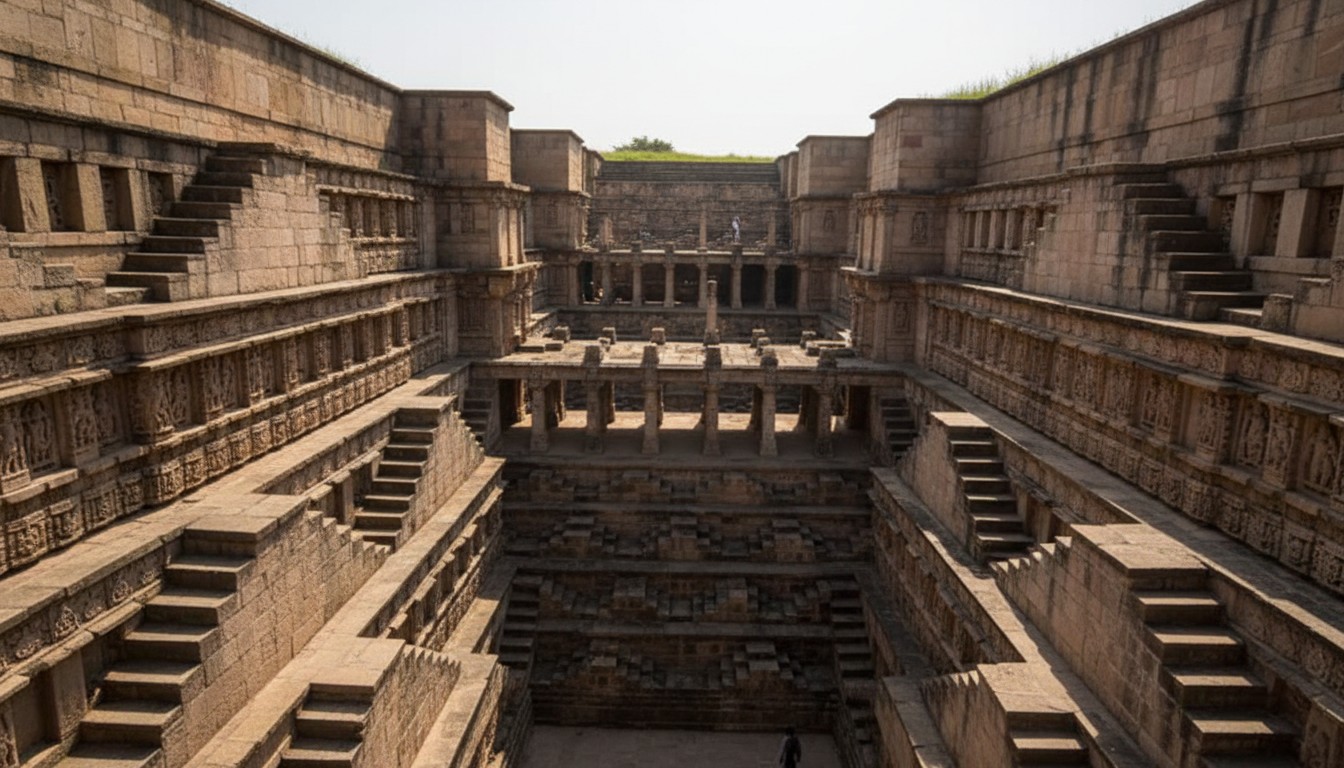
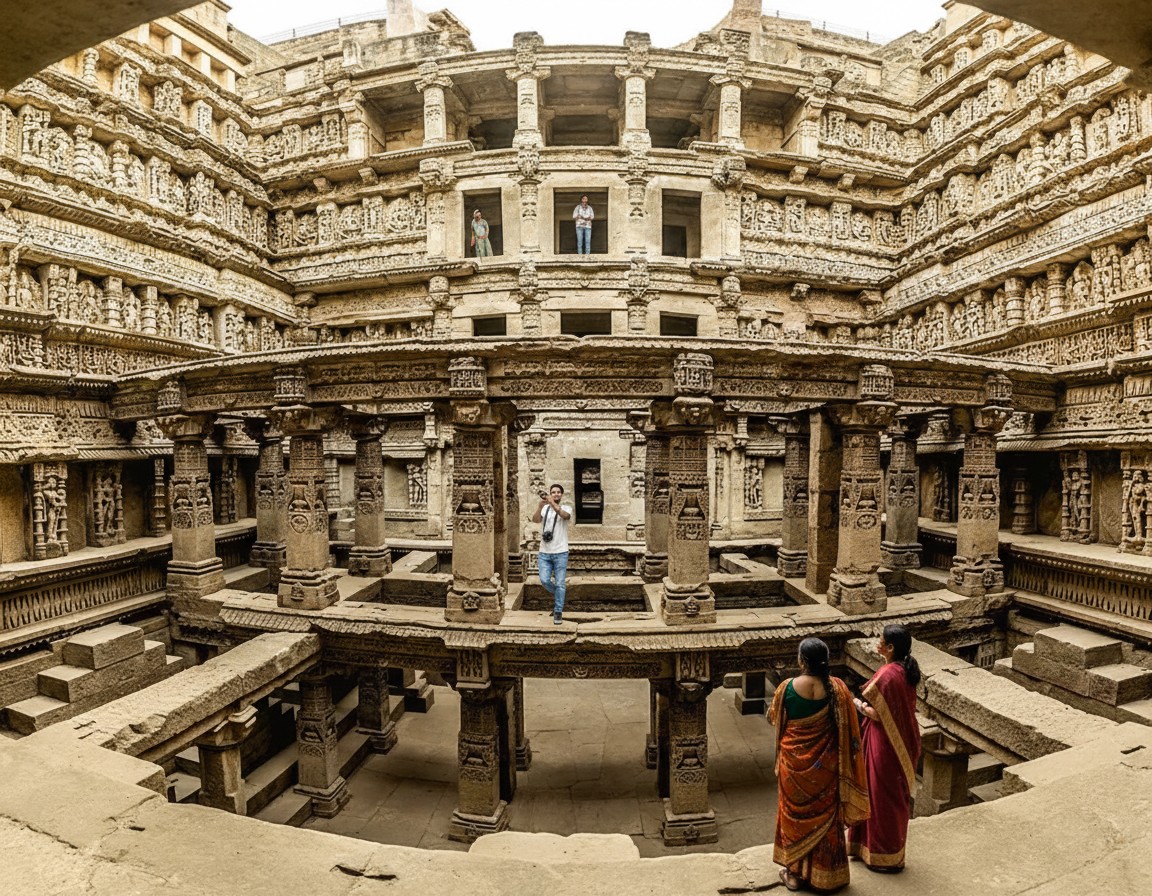
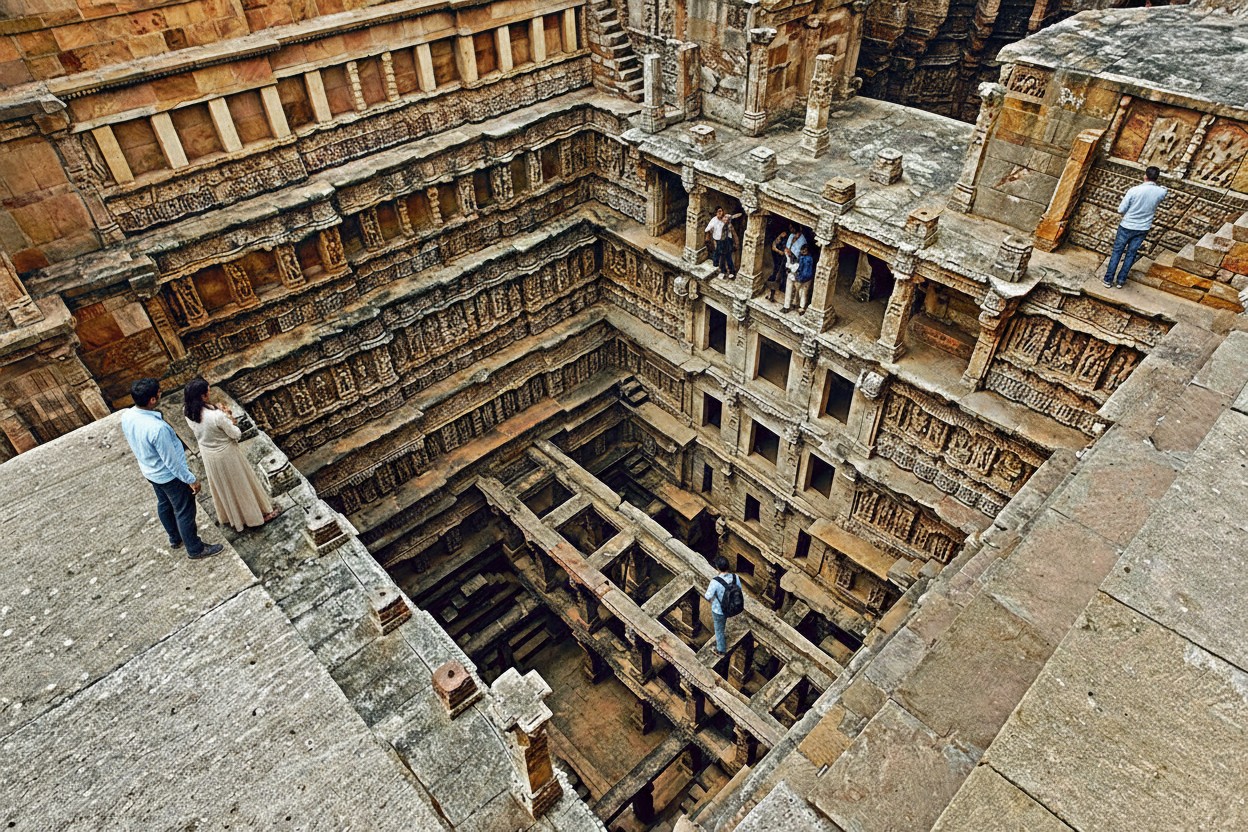
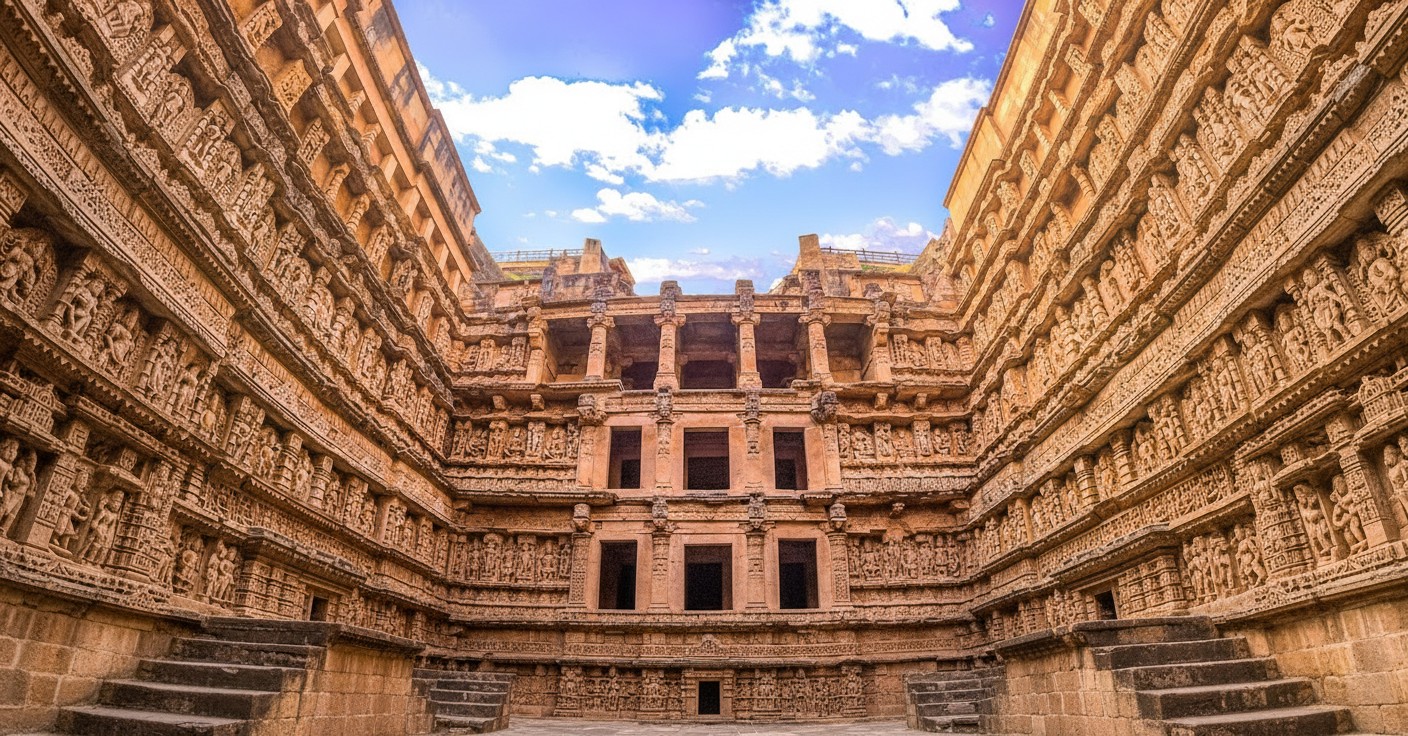
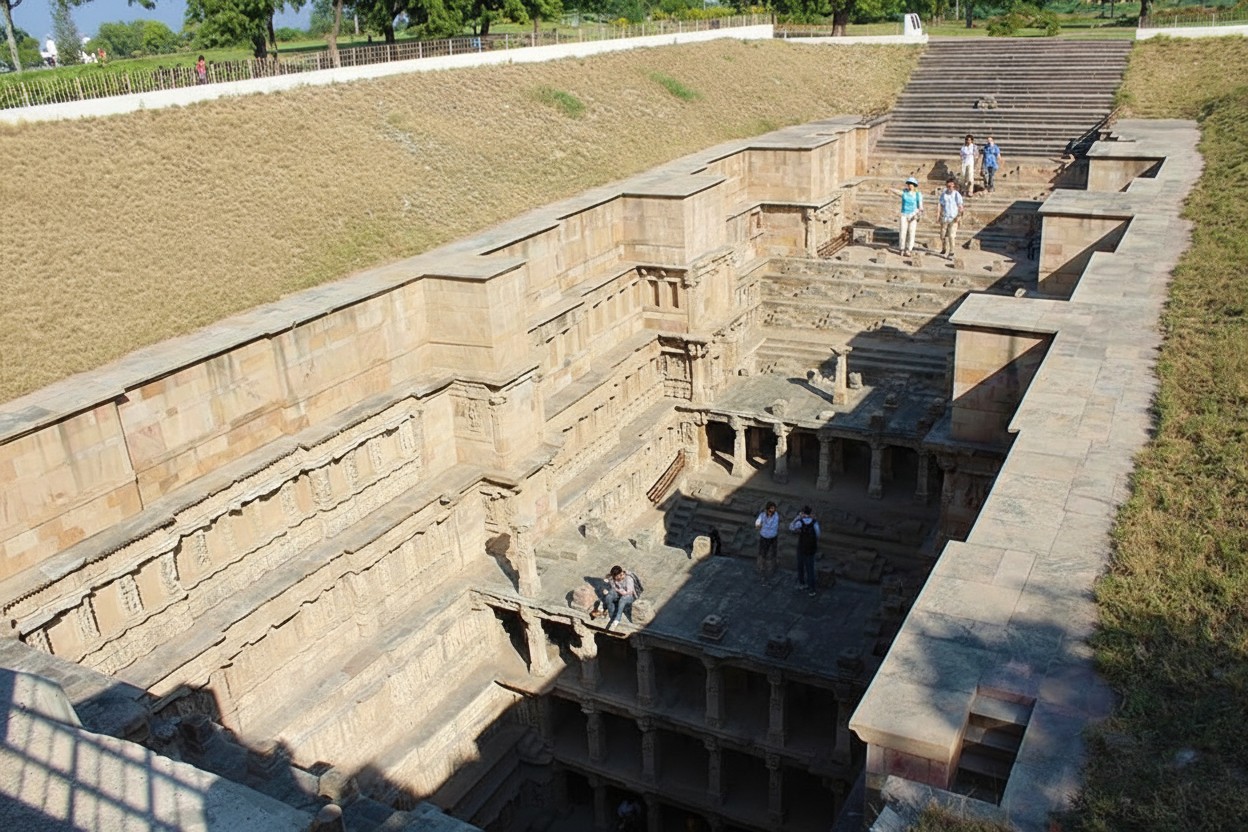
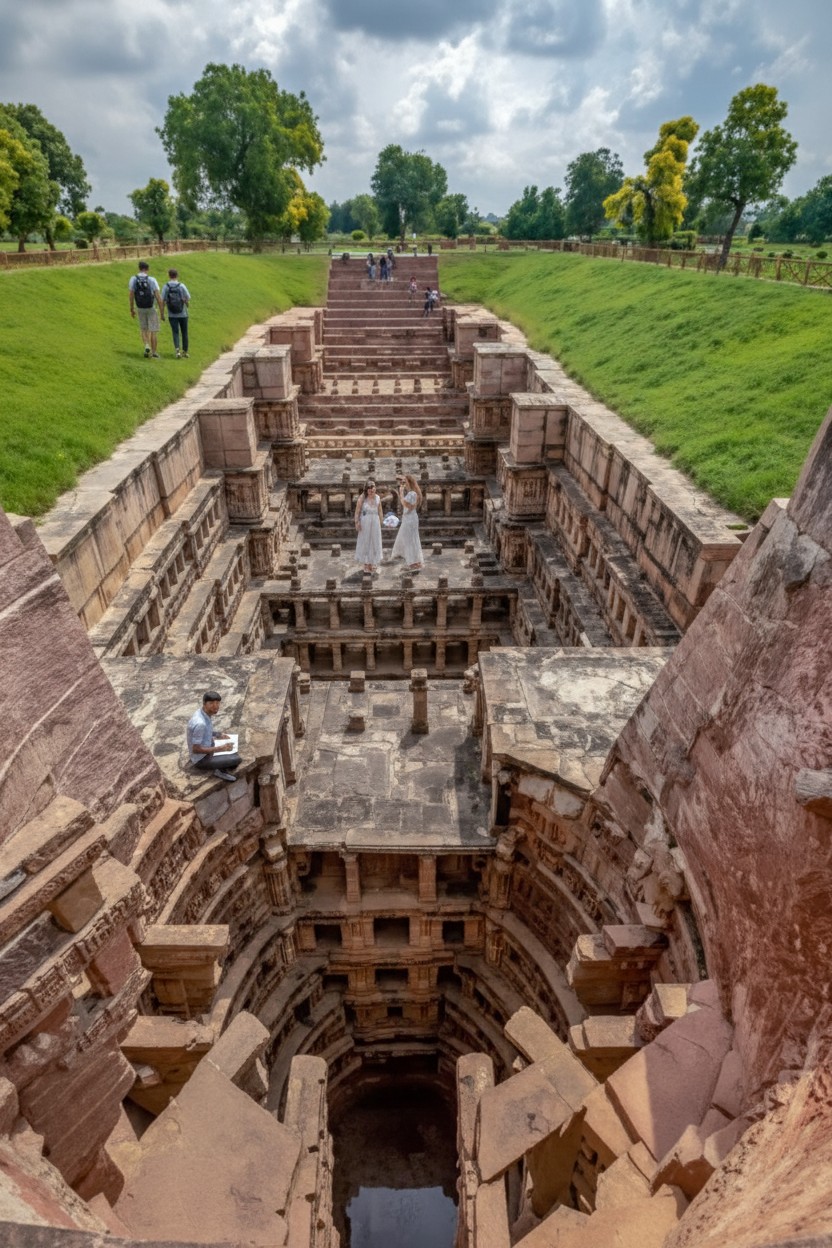
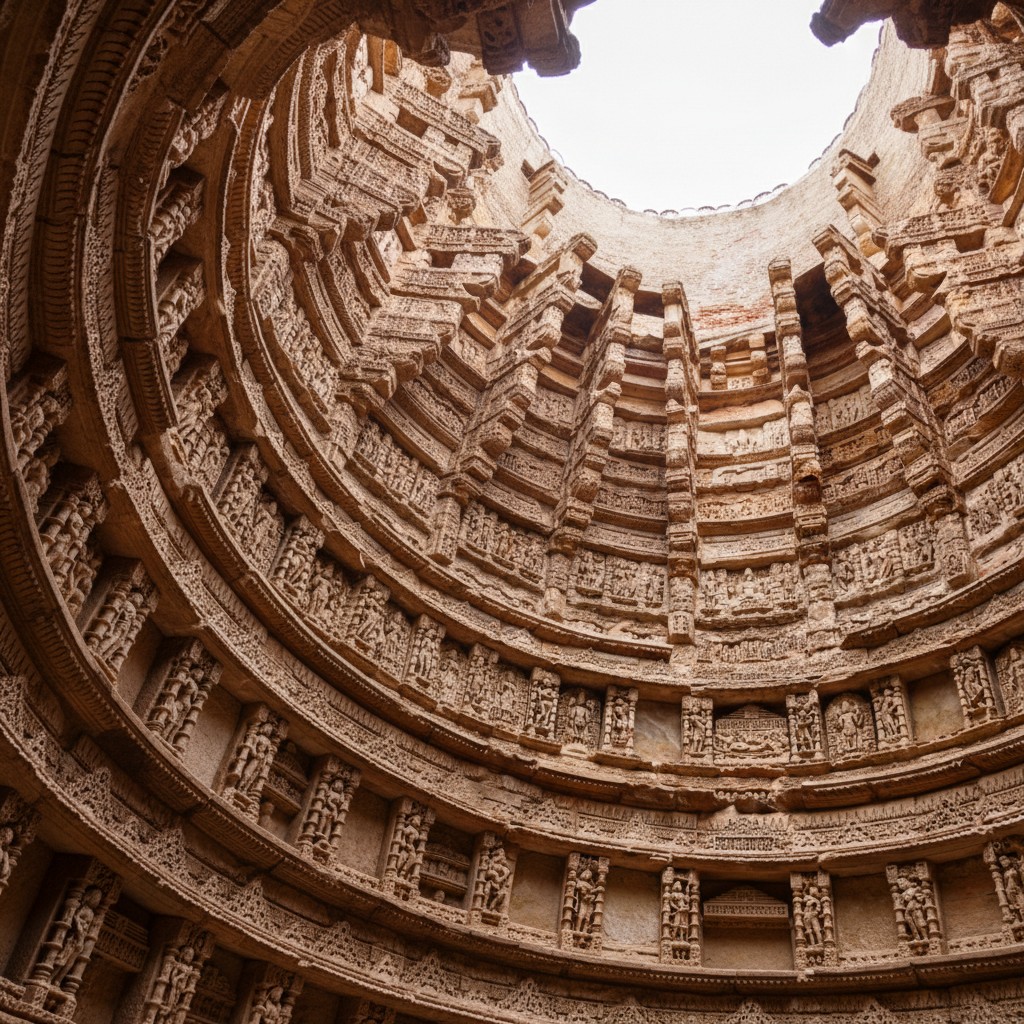
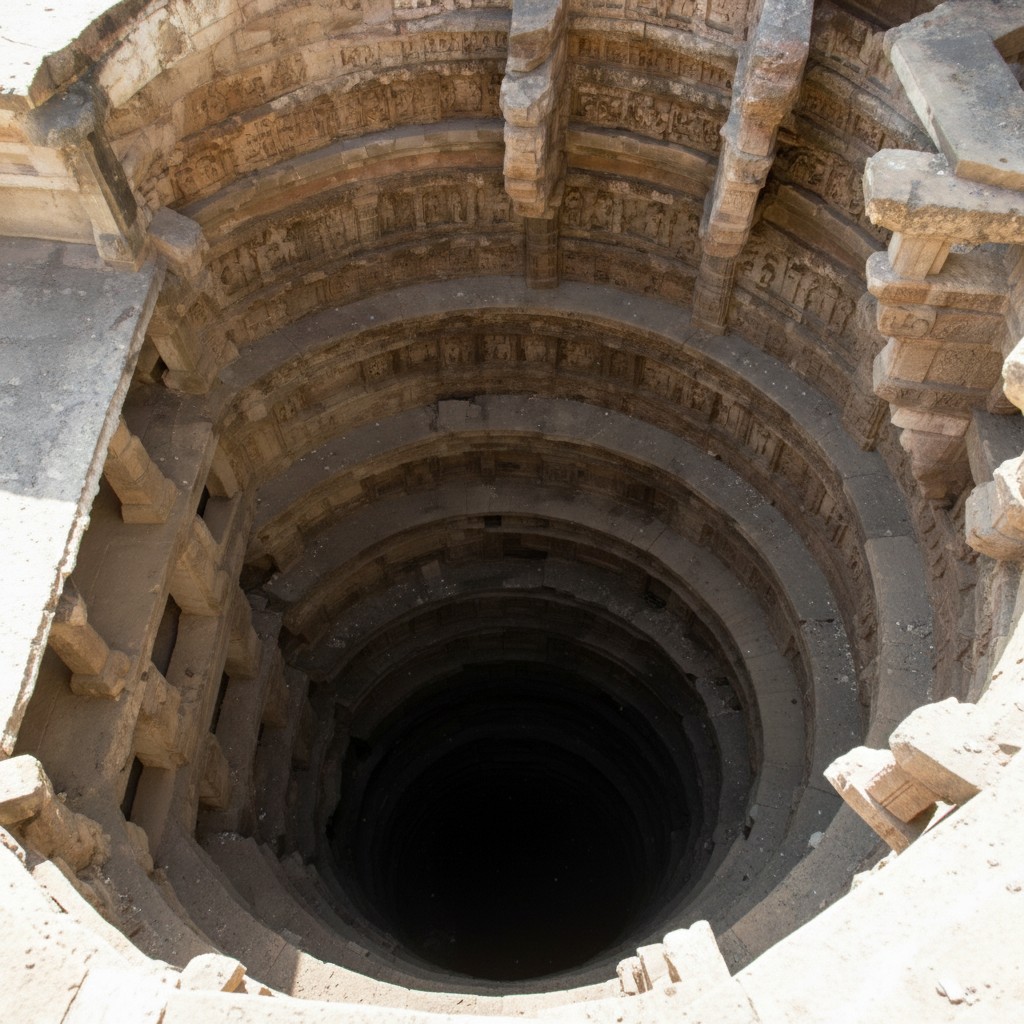
Rani ki Vav is one of India’s finest stepwells and a UNESCO World Heritage Site located in the historic town of Patan. Built during the 11th century by Queen Udayamati in memory of King Bhimdev I of the Solanki dynasty, this architectural masterpiece reflects the artistic brilliance of ancient India. Designed as an inverted temple, the stepwell is famous for its intricate carvings, beautifully sculpted pillars, and mythological figures. The structure descends several levels underground and once served as a water storage system as well as a spiritual and social gathering place.
Rani ki Vav is an extraordinary stepwell located in the historic town of Patan. Built in the 11th century by Queen Udayamati in memory of her husband King Bhimdev I, this magnificent monument is considered one of the finest examples of ancient Indian architecture and engineering. Recognized as a UNESCO World Heritage Site, the stepwell reflects the cultural richness and artistic excellence of the Solanki era.
The structure was designed not only as a water storage system but also as a spiritual and social space. Constructed in the form of an inverted temple, the stepwell descends through multiple levels adorned with intricately carved pillars, sculptures, and decorative panels. The walls display beautifully detailed figures of gods, goddesses, celestial beings, and scenes from mythology, especially the various avatars of Lord Vishnu.
One of the most fascinating aspects of Rani ki Vav is its architectural precision and underground cooling system. Even during hot weather, the lower levels remain pleasantly cool. The craftsmanship seen in every corner demonstrates the advanced artistic skills and engineering knowledge of ancient India.
The monument remained buried under silt for centuries due to flooding from the nearby Saraswati River and was later restored by the Archaeological Survey of India. Today, it attracts tourists, historians, photographers, and architecture lovers from around the world.
Visiting Rani ki Vav offers a unique opportunity to experience India’s glorious heritage, admire timeless stone artistry, and understand the importance of water conservation systems developed centuries ago. It stands as a symbol of beauty, devotion, and architectural brilliance.
🎯 Things to do
- Walk down the stepped galleries and observe the rich carvings.
- Learn the stories behind sculptural panels (many depict scenes from mythology).
- Take guided tours available on site for deeper insight.
- Photography — especially early morning or late afternoon light.
- Visit the museum/exhibition area (if available) to see context exhibits.
📍 Near By
- Sun Temple_ Modhera – Ancient Hindu Sun Temple renowned for intricate carvings. (~35 km)
- Patan Patola Heritage Museum – Showcasing traditional Patola weaving
- Sahasralinga Talav – Large medieval reservoir with historic and engineering interest
- Patan City Walls & Jain Temples – Explore local heritage sites.
🛣️ How to Reach
By Air : The nearest airport is Sardar Vallabhbhai Patel International Airport about 125 km away. Taxis and buses are available from the airport to Patan.,
By Train : The nearest railway station is Patan Railway Station connected to major cities in Gujarat..
By Road : Patan is well connected by road from Ahmedabad Mehsana and nearby towns. State transport buses and private taxis operate regularly.
⭐ Why Visit
UNESCO World Heritage architecture,
Extraordinary stone carvings and sculptures,
Ancient engineering marvel for water conservation,
Rich historical and cultural significance,
Ideal destination for history lovers photographers and architecture enthusiasts
💡 Travel Tips
Best time to visit: October to February,
Visit early morning or evening for pleasant weather and photography,
Wear comfortable footwear for walking and climbing steps,
Carry water sunglasses and a hat during summer,
Maintain cleanliness and avoid touching delicate carvings,
Combine the trip with nearby heritage attractions in Patan
🌟 Special Features
More than 500 principal sculptures and thousands of smaller carvings,
Seven levels of stairways and panels,
Intricate depictions of Hindu deities including Vishnu avatars,
Maru-Gurjara architectural style,
Remarkable underground cooling effect,
Symmetrical design with detailed craftsmanship
Red Fort
• Central Delhi • Delhi
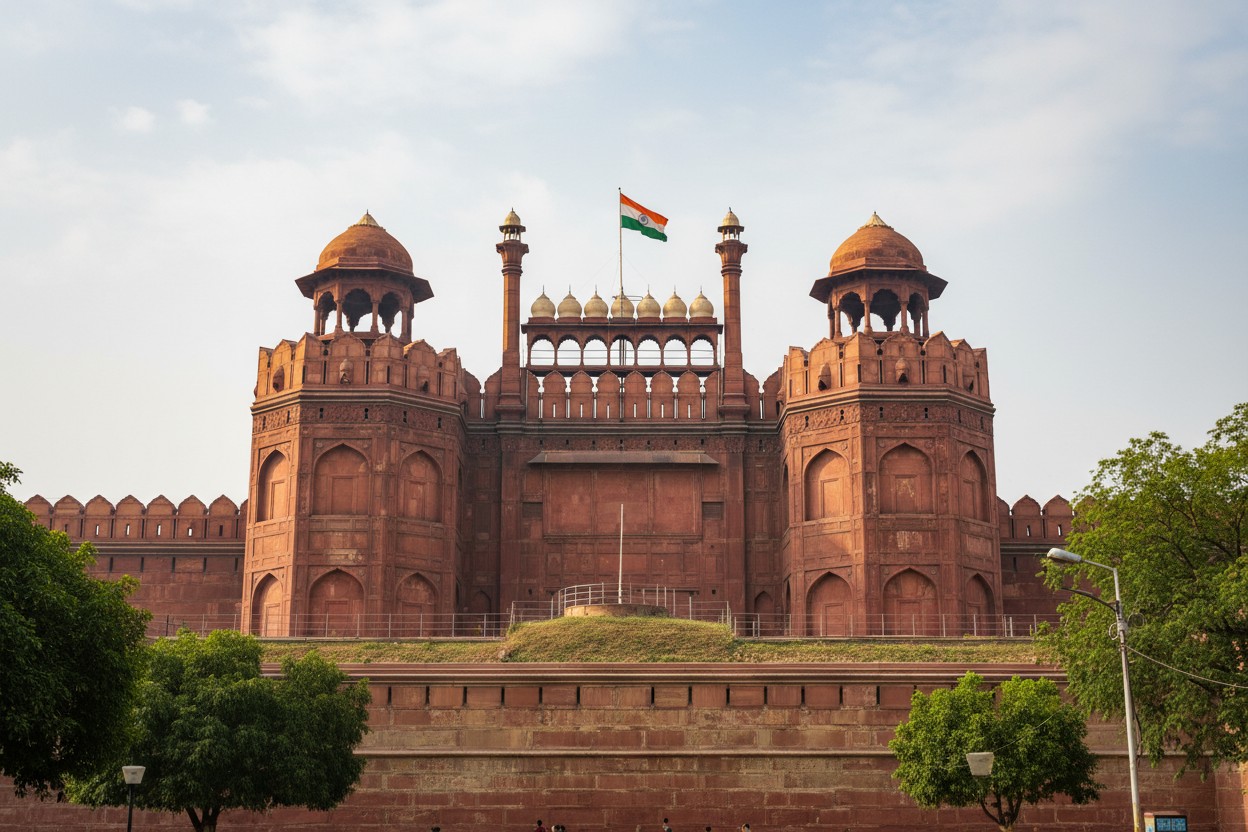
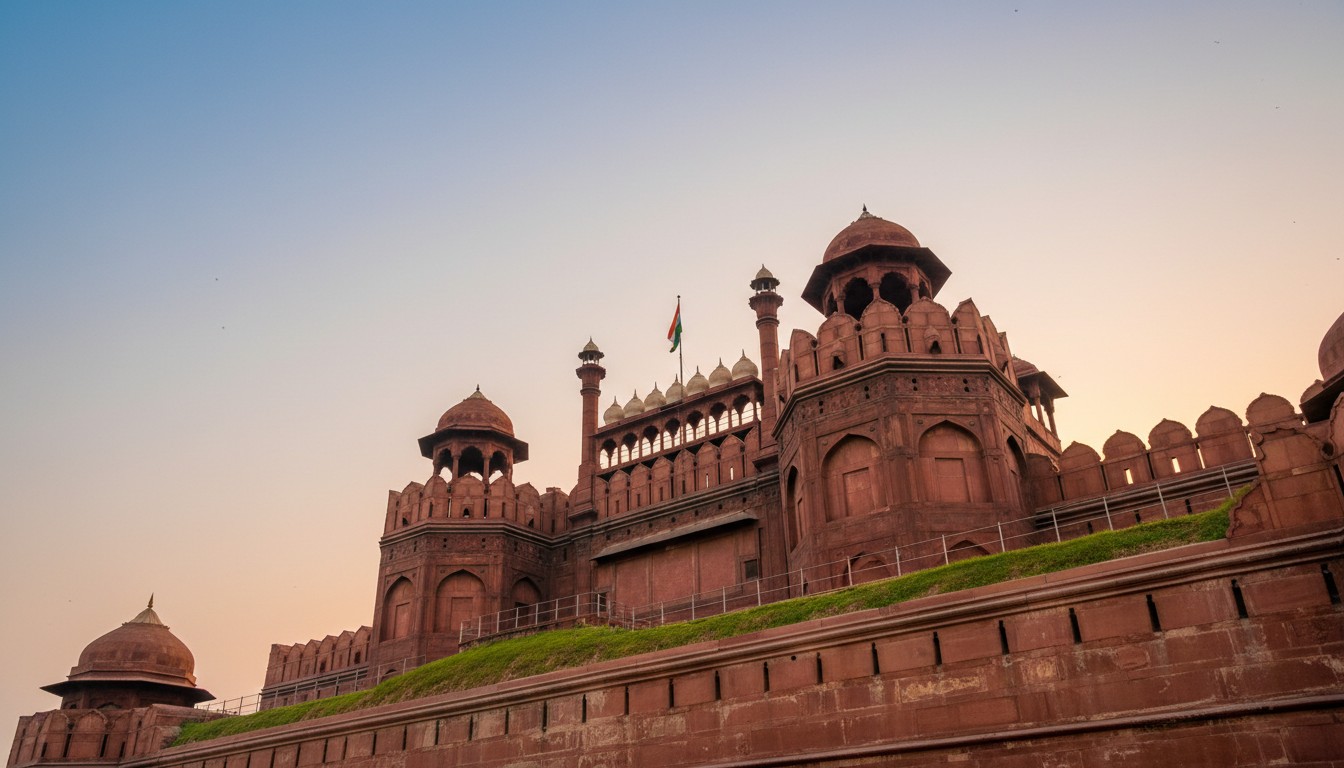
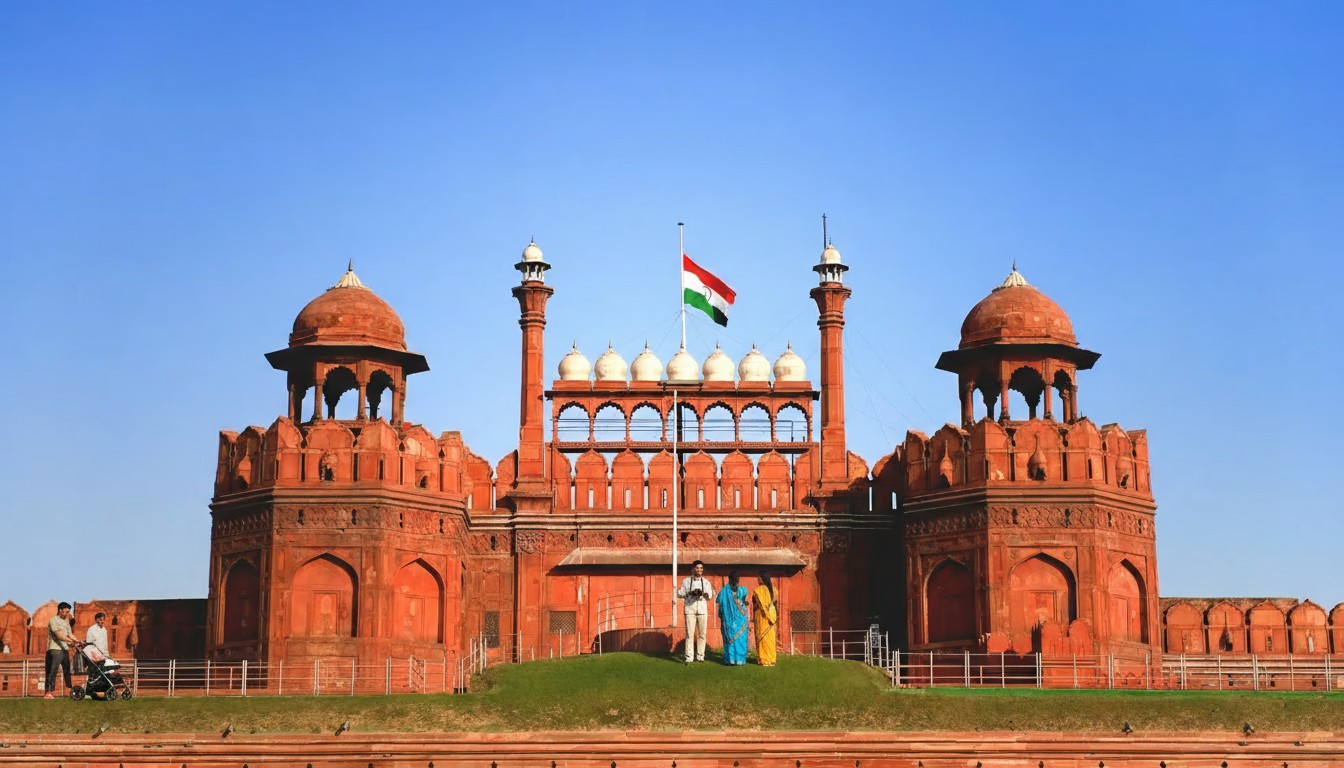
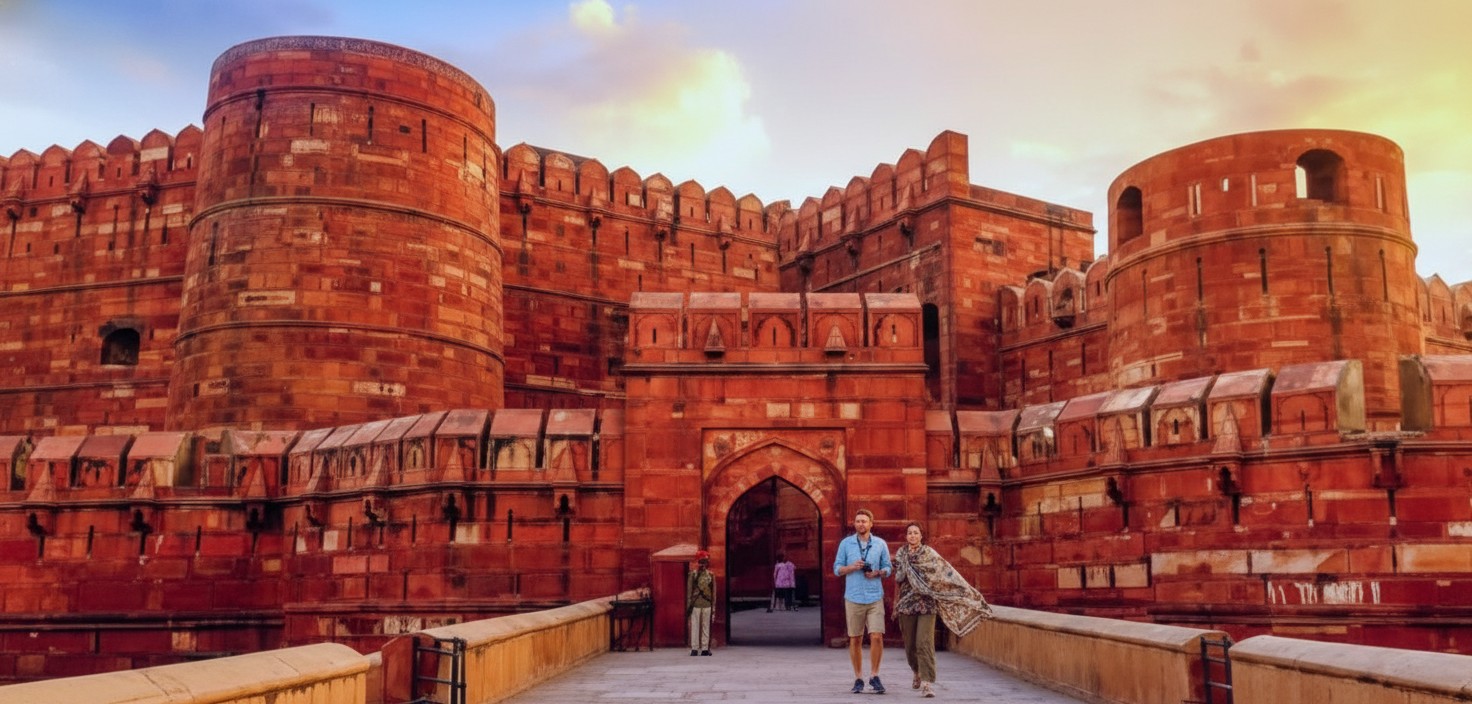
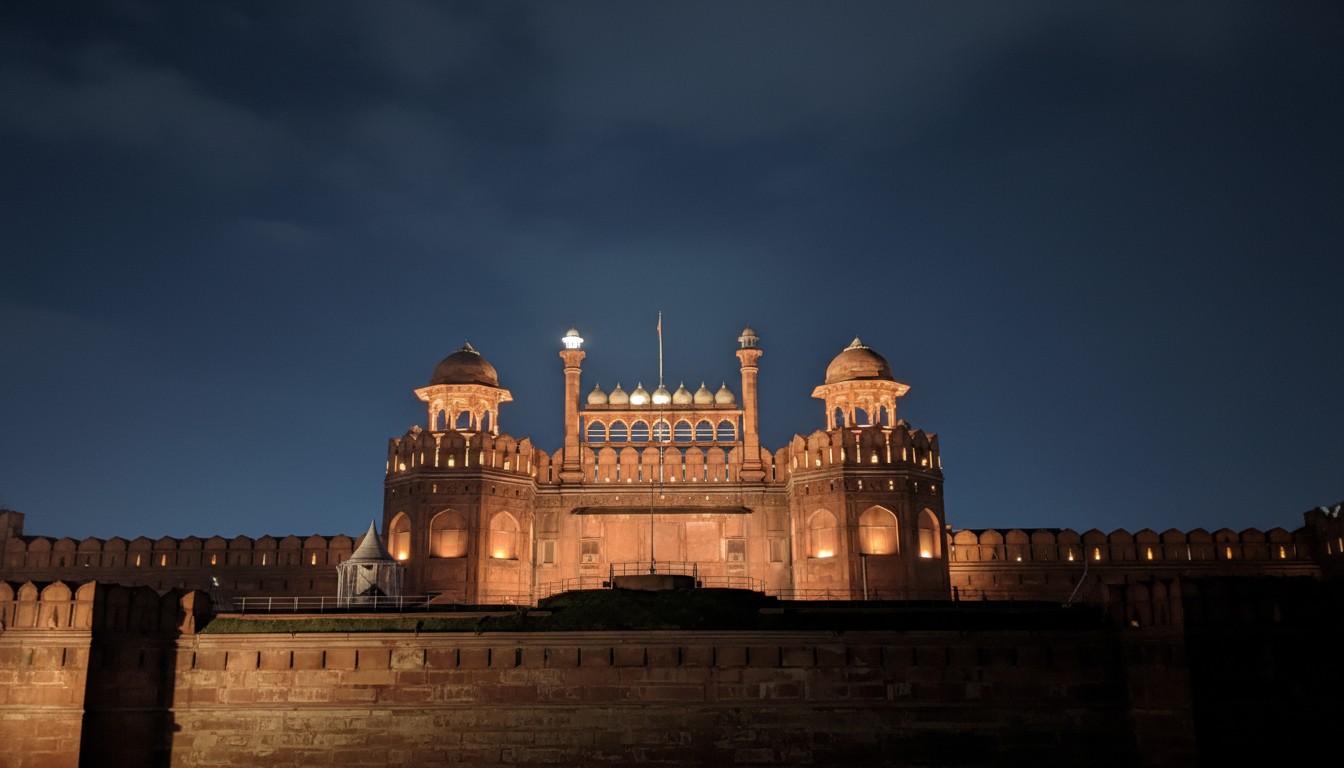
The Red Fort is one of India’s most famous historical monuments and a UNESCO World Heritage Site. Built in 1648 by Mughal Emperor Shah Jahan, the fort served as the main residence of the Mughal emperors for nearly 200 years. Constructed using massive red sandstone walls, the fort represents the brilliance of Mughal architecture, combining Persian, Timurid, and Indian styles. Every year on India’s Independence Day, the Prime Minister hoists the national flag here, making it a symbol of national pride and heritage.
The Red Fort is one of the most iconic monuments in India and an important symbol of the country’s rich cultural heritage. Located in the heart of Old Delhi, this magnificent fort was built by Mughal Emperor Shah Jahan in 1648 when he shifted his capital from Agra to Delhi. The fort gets its name from the huge red sandstone walls that surround the complex. Covering a vast area, the Red Fort reflects the grandeur, luxury, and artistic excellence of Mughal architecture.
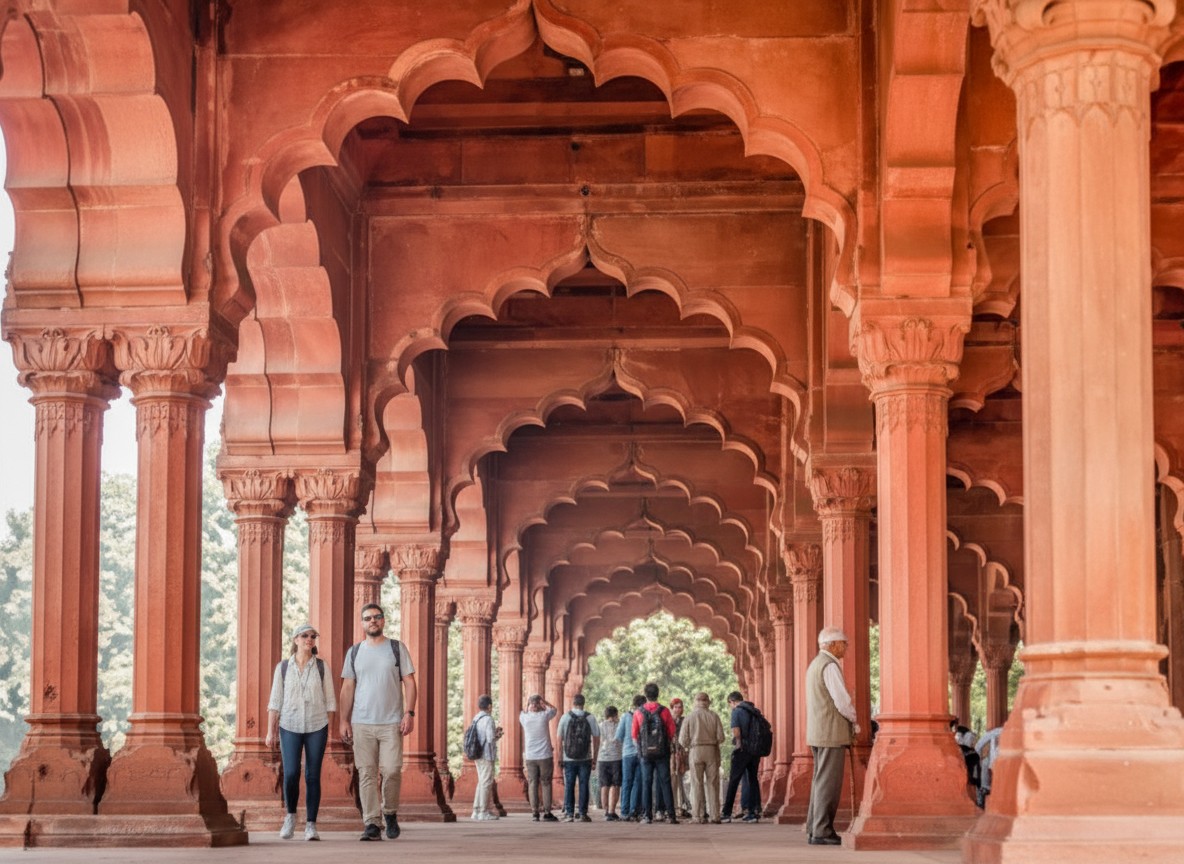
Inside the fort, visitors can explore several impressive buildings such as the Diwan-i-Aam, where the emperor addressed the public, and the Diwan-i-Khas, known for its beautiful marble decorations. The fort also includes royal baths, gardens, palaces, and museums that showcase valuable artifacts from India’s history. The blend of Persian, Islamic, and Indian architectural styles makes the monument unique and visually stunning.
The Red Fort holds great historical importance because it remained the political center of the Mughal Empire for nearly two centuries. Today, it is also associated with India’s independence, as the Prime Minister hoists the national flag here every year on 15th August. Tourists from all over the world visit the fort to admire its beauty and learn about India’s glorious past.
A visit to the Red Fort offers a memorable experience filled with history, culture, and architectural brilliance. Its majestic appearance, historical significance, and lively surroundings make it one of the must-visit attractions in Delhi.
🎯 Things to do
- Lahori Gate – Main entrance to the fort.
- Diwan-i-Aam & Diwan-i-Khas – Halls of public and private audience.
- Moti Masjid – Serene mosque inside the complex.
- Chhatta Chowk – Historic covered market inside Red Fort.
- Museums – Like the Indian War Memorial Museum in Naubat Khana.
📍 Near By
- Jama Masjid – One of India’s largest mosques.
- Chandni Chowk – Historic market for food & shopping.
- Sri Digambar Jain Lal Mandir – Ancient Jain temple opposite Red Fort.
- Raj Ghat – Gandhi’s memorial (peaceful garden).
- Gurudwara Sis Ganj Sahib – Historic Sikh shrine.
🛣️ How to Reach
By Air: The nearest airport is Indira Gandhi International Airport about 20 km away.,
By Train: The nearest railway station is Old Delhi Railway Station around 3 km from the fort.,
By Road: Buses taxis auto-rickshaws and cabs are easily available throughout Delhi.,
By Metro: The easiest way is through the Delhi Metro. Get down at Lal Quila or Chandni Chowk Metro Station.
⭐ Why Visit
Explore the rich Mughal history and architecture.,
Experience the famous Sound and Light Show in the evening.,
Visit museums inside the fort complex.,
Enjoy nearby attractions like Chandni Chowk and Jama Masjid.,
Perfect destination for photography and cultural learning.
💡 Travel Tips
Visit during early morning or evening to avoid heat.,
Carry water sunglasses and comfortable footwear.,
Keep your entry ticket safe for museum access.,
Avoid weekends if you prefer less crowd.,
Hire a guide or audio guide for better historical understanding.
🌟 Special Features
Massive red sandstone walls stretching about 2 km.,
Beautiful Mughal structures like Diwan-i-Aam and Diwan-i-Khas.,
Intricate marble carvings and royal chambers.,
UNESCO World Heritage recognition.,
Historic venue for Independence Day celebrations.
Jagannath Temple
• Puri • Odisha
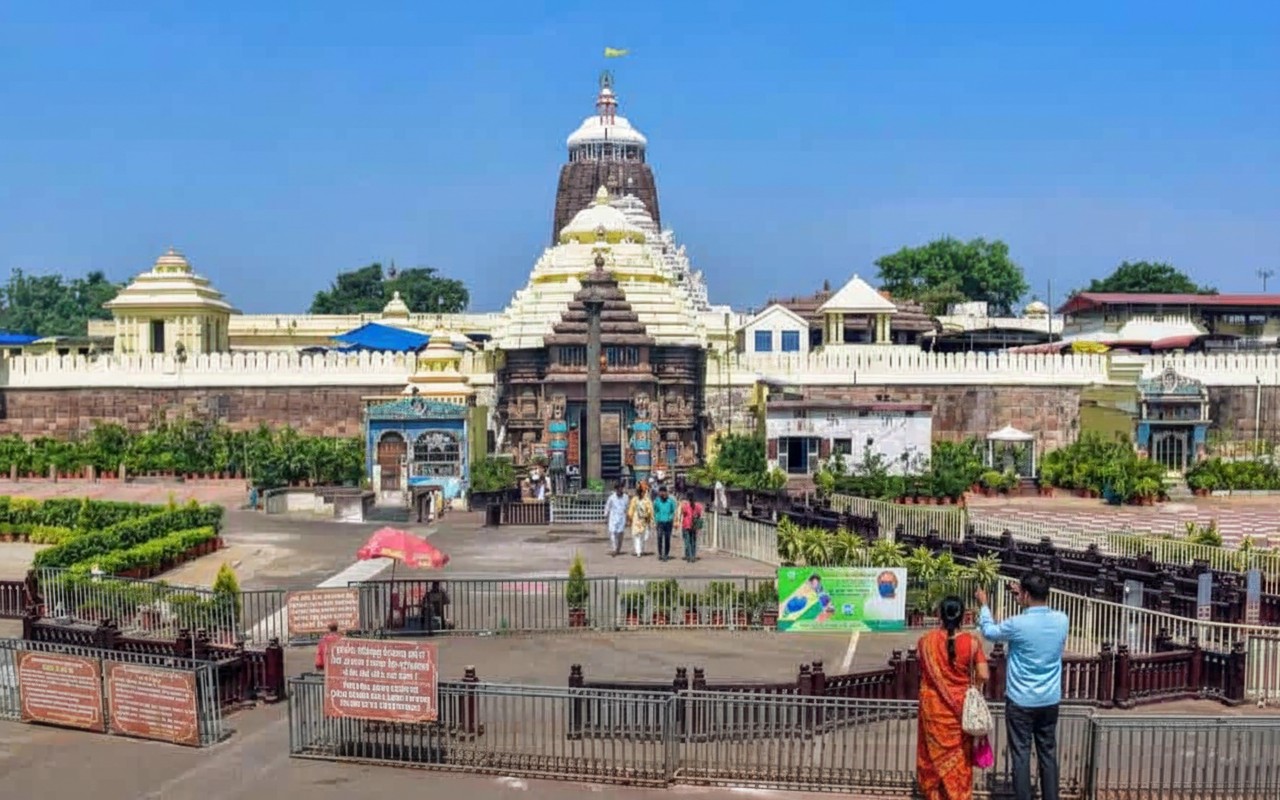
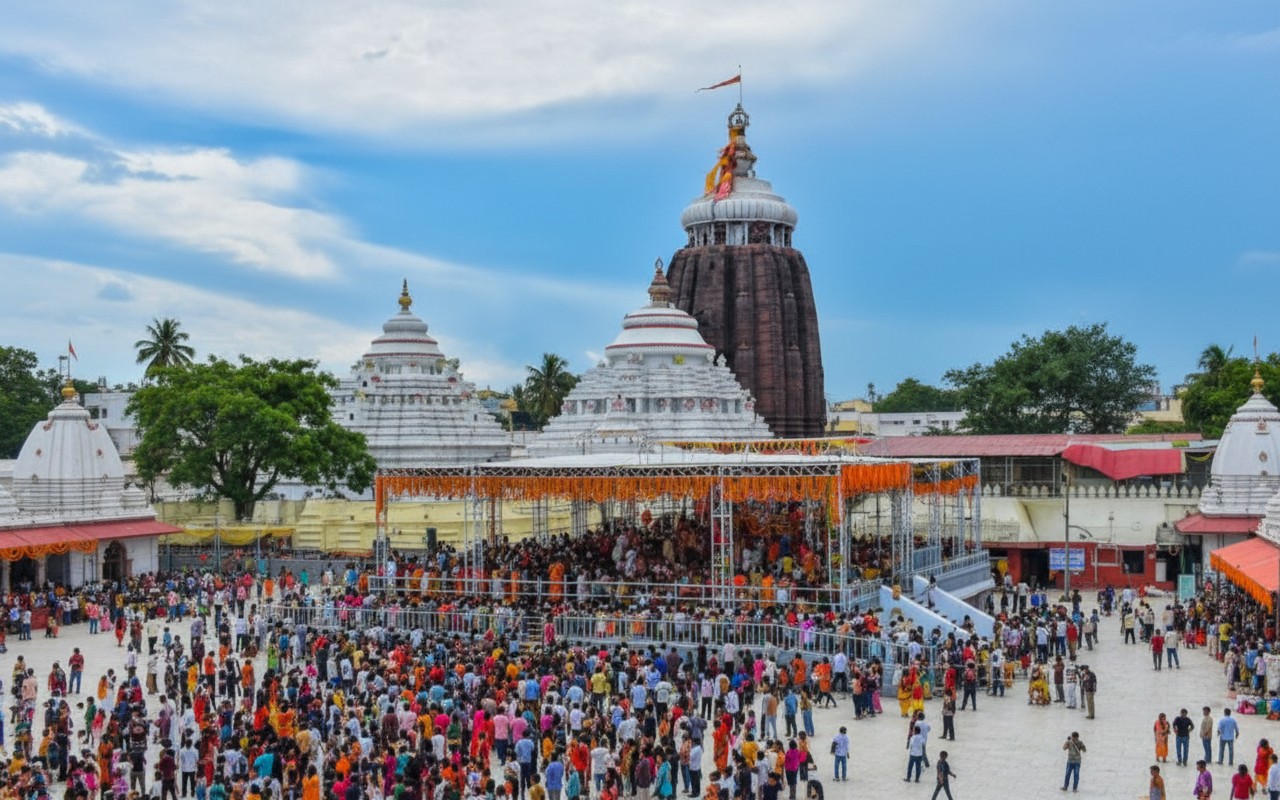
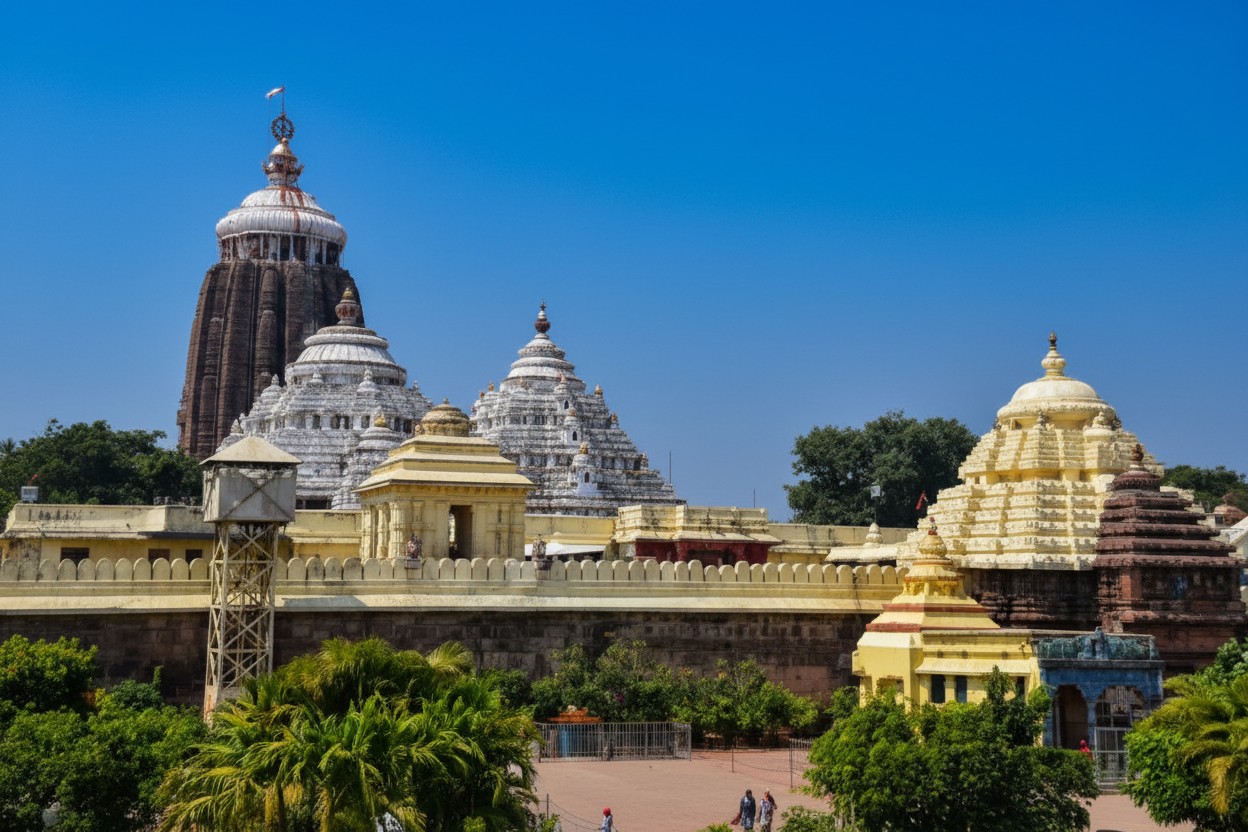
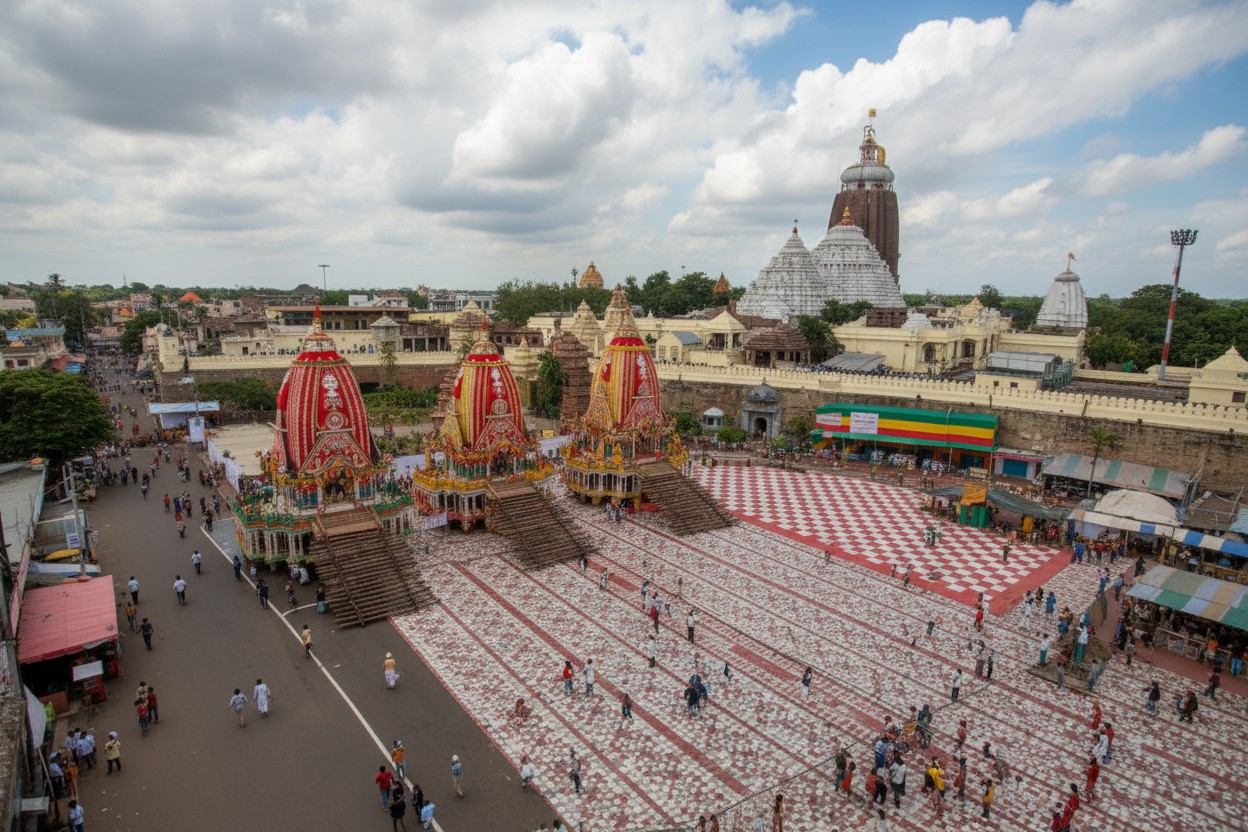
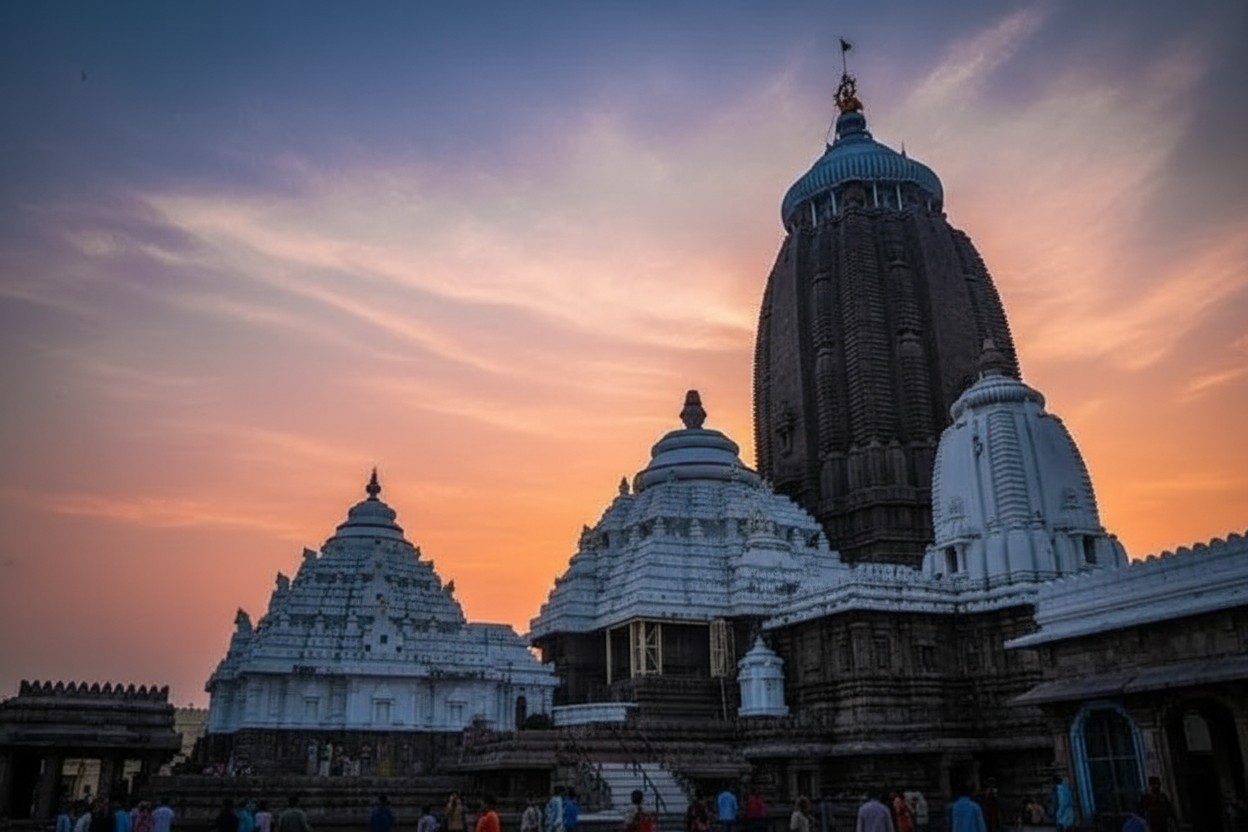
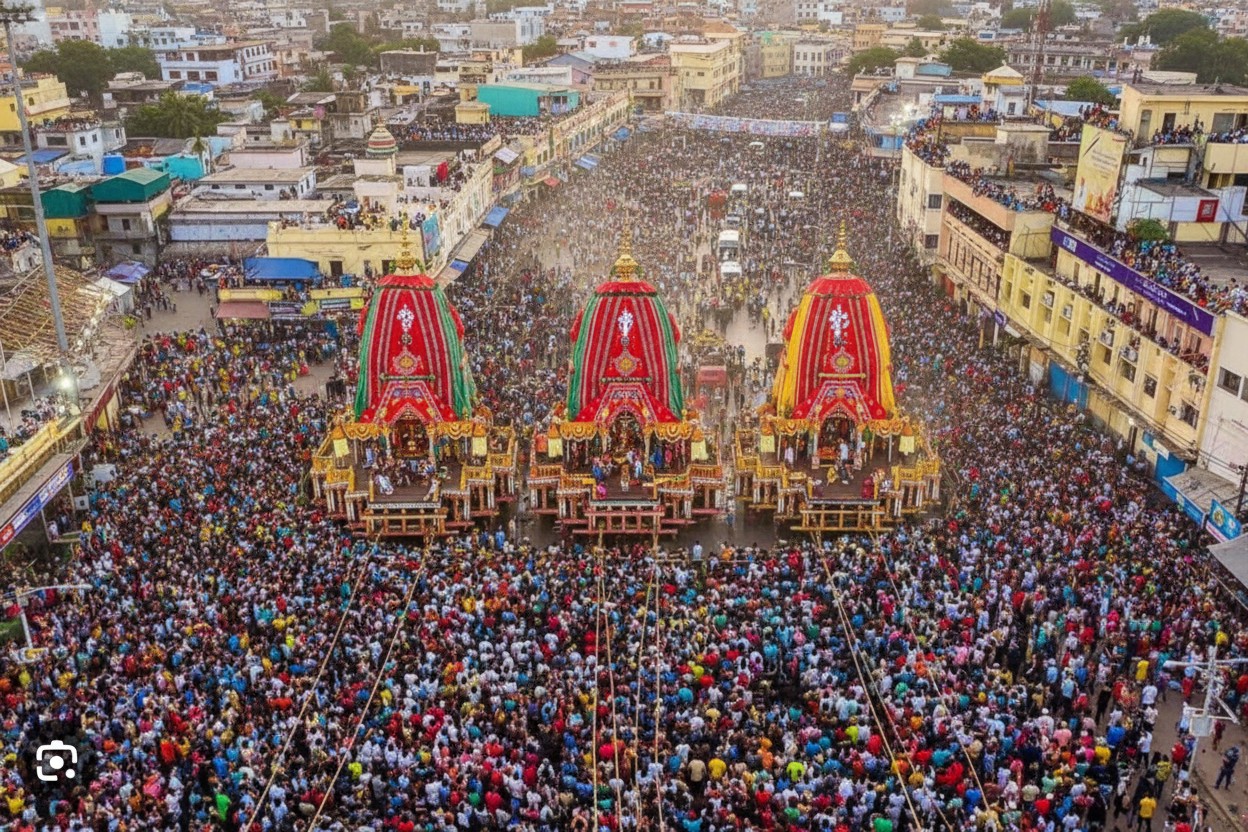
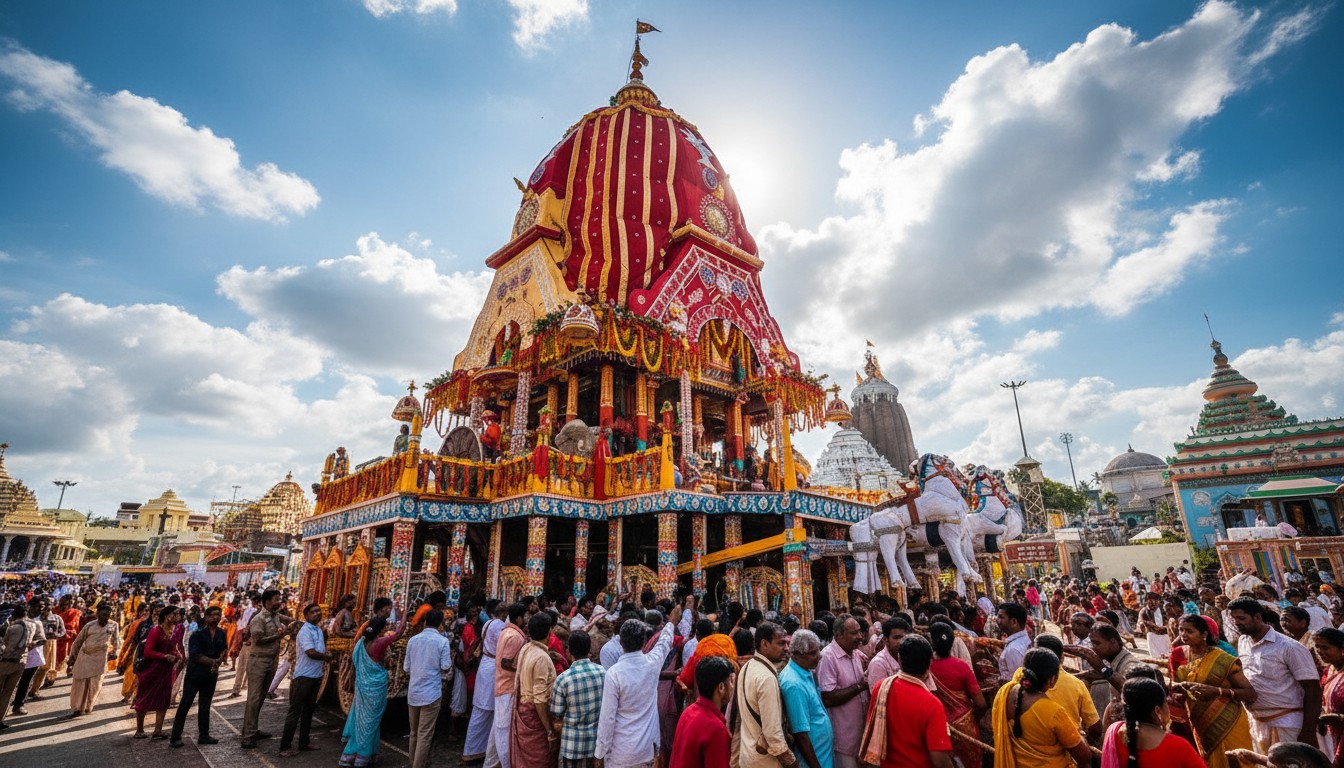
The famous Jagannath Temple is one of the most sacred Hindu pilgrimage sites in India and an important part of the Char Dham Yatra. Dedicated to Lord Jagannath, a form of Lord Vishnu, the temple is known for its spiritual atmosphere, magnificent architecture, and world-famous Rath Yatra festival. Built in the 12th century by King Anantavarman Chodaganga Deva, the temple attracts millions of devotees and tourists every year. The main deities worshipped here are Lord Jagannath, Lord Balabhadra, and देवी Subhadra. The temple’s towering structure, detailed carvings, and traditional rituals reflect the rich cultural heritage of Odisha.
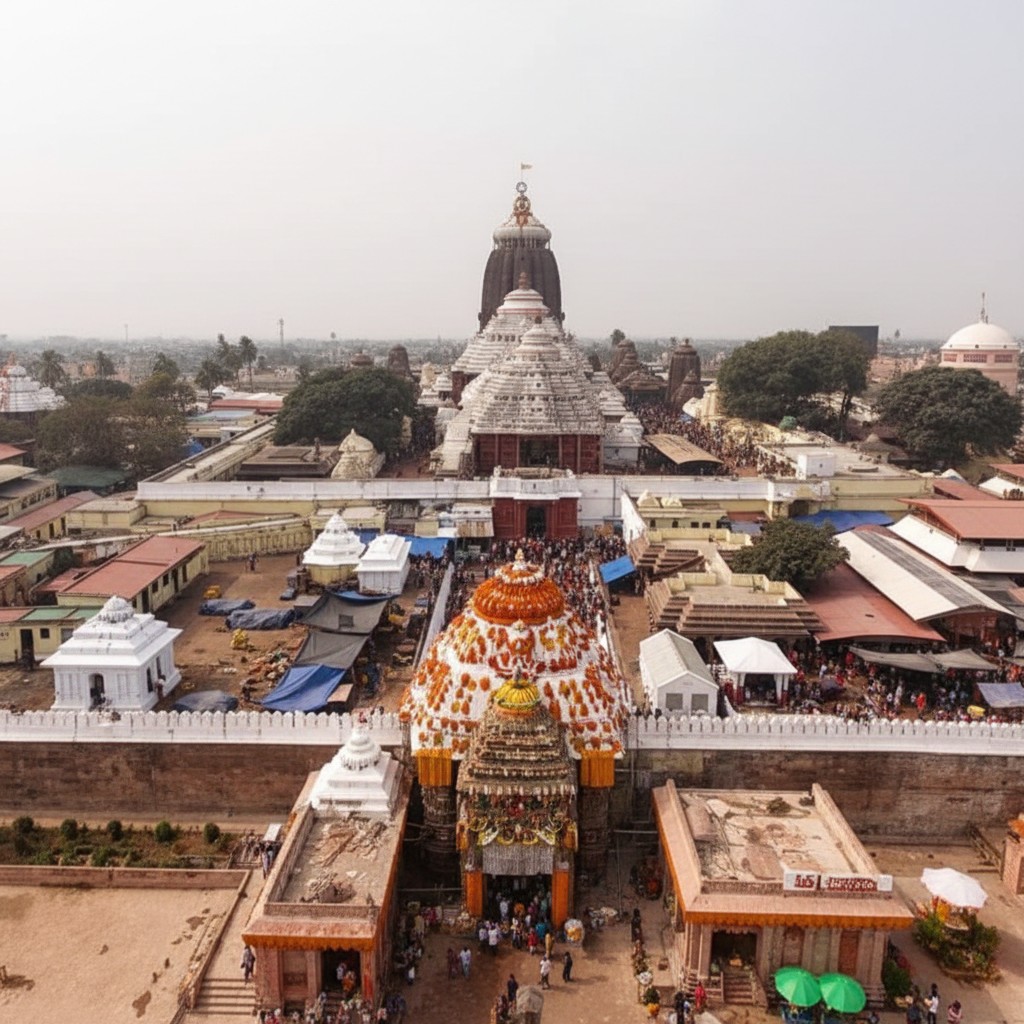
The Jagannath Temple is a historic Hindu temple located in Puri on the eastern coast of India, dedicated to Sri Jagannath — an incarnation of Lord Vishnu. The present structure was substantially developed in the 12th century by King Anantavarman Chodaganga of the Eastern Ganga dynasty, and it stands on the site of earlier shrines. The temple is a central pilgrimage site in the Char Dham circuit and is renowned for its unique wooden deities, which are ceremonially replaced in a ritual called Nabakalebara every 12–19 years.
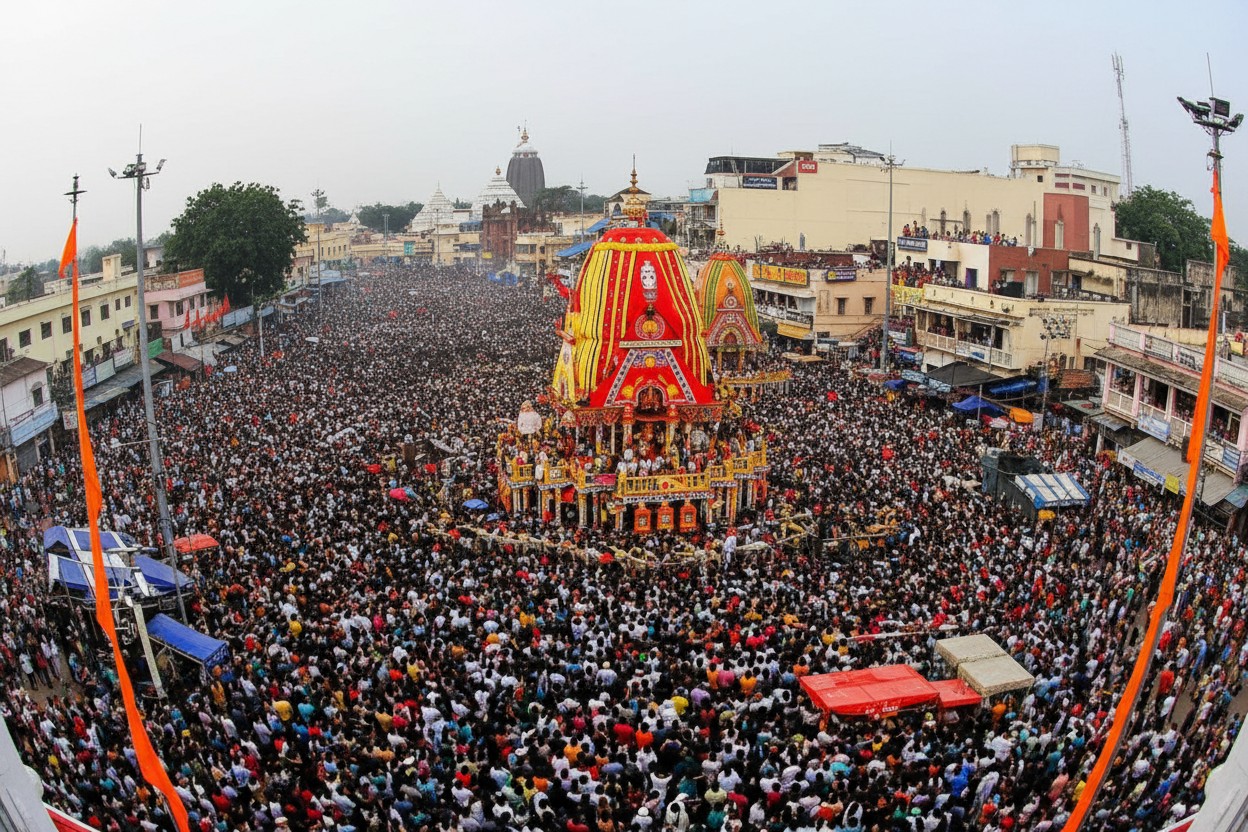
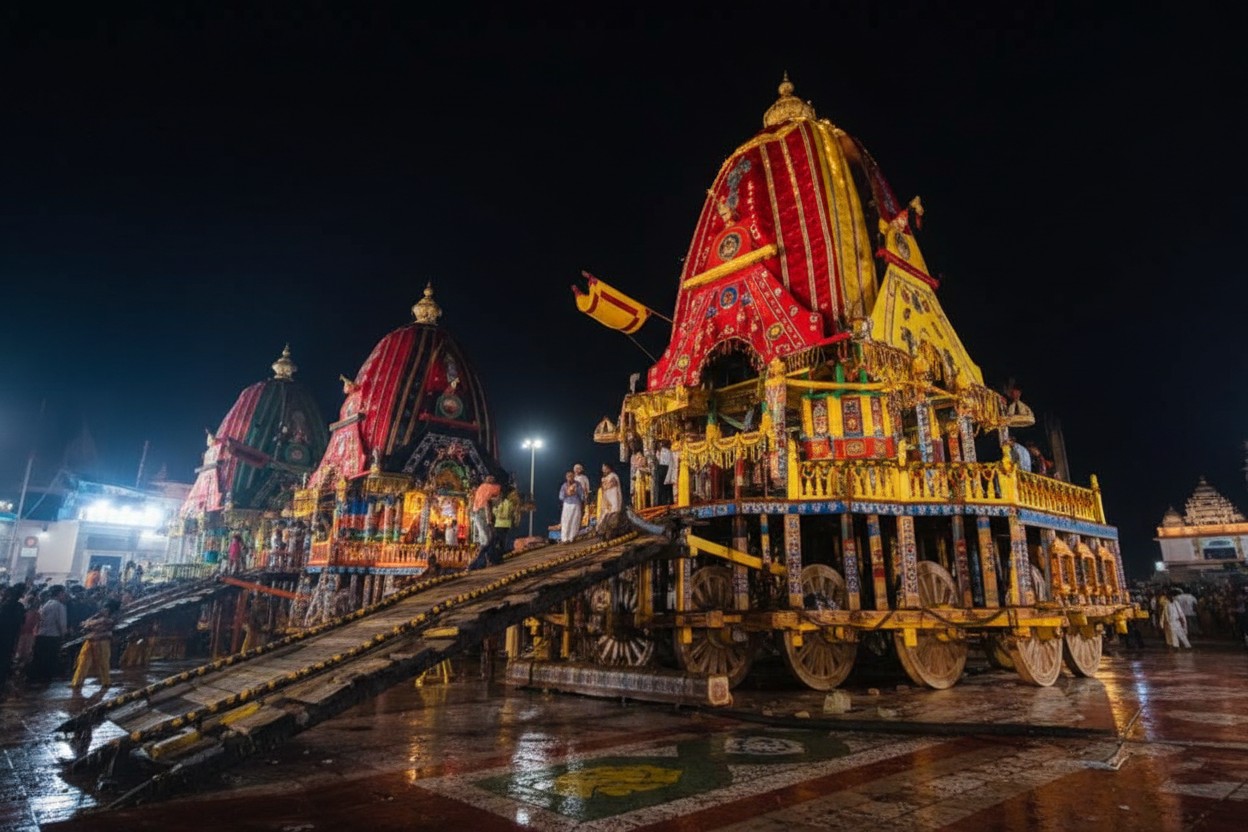
The temple complex includes multiple smaller shrines, and its most celebrated festival is Ratha Yatra, where the principal deities — Jagannath, Balabhadra, and Subhadra — are placed on giant wooden chariots and pulled through the streets to the Gundicha Temple. The temple is administered by the Shree Jagannath Temple Managing Committee.
🎯 Things to do
- Darshan of Lord Jagannath/ Balabhadra/ and Subhadra.
- Ratha Yatra Festival (major event June-July).
📍 Near By
- Puri Beach – scenic beach on the Bay of Bengal.
- Konark Sun Temple (~35 km) – UNESCO World Heritage site.
- Chilika Lake – Asia’s largest brackish water lake (bird watching
- cruises).
- Raghurajpur Artist Village – famous for Pattachitra art and handicrafts.
- Chandrabhaga Beach – quieter beach near Konark.
🛣️ How to Reach
By Air: Nearest airport is Biju Patnaik International Airport about 60 km away.,
By Train: Puri Railway Station is well connected to major Indian cities.,
By Road: Regular buses and taxis are available from Bhubaneswar Cuttack and nearby cities.
⭐ Why Visit
One of India’s holiest pilgrimage destinations,
Experience the famous Rath Yatra festival,
Witness unique Odia temple architecture,
Taste sacred Mahaprasad food,
Explore spiritual and cultural traditions of Odisha
💡 Travel Tips
Wear modest traditional clothing while visiting.,
Mobile phones and cameras are generally not allowed inside.,
Visit early morning to avoid crowds.,
Try the temple Mahaprasad served inside the complex.,
Non-Hindus are not permitted inside the main temple premises but nearby viewpoints offer good views.
🌟 Special Features
Famous annual Rath Yatra celebration,
World’s largest temple kitchen,
Sacred wooden idols replaced during Nabakalebara ritual,
Unique flag-changing ritual performed daily on the temple dome,
Located near the beautiful Puri Beach